
Will AI Replace Mechanics and Transform the Job Market in the Next Decade?
Artificial intelligence (AI) is advancing rapidly, reshaping many industries. One question gaining attention is whether AI will take over mechanic jobs, including vehicle repair and manufacturing. How close are we to this reality? Will AI-driven automation make human mechanics obsolete? What will happen to income and employment if machines replace these roles? This post explores these questions, offering a clear picture of AI’s impact on mechanics and the broader job market over the next ten years.
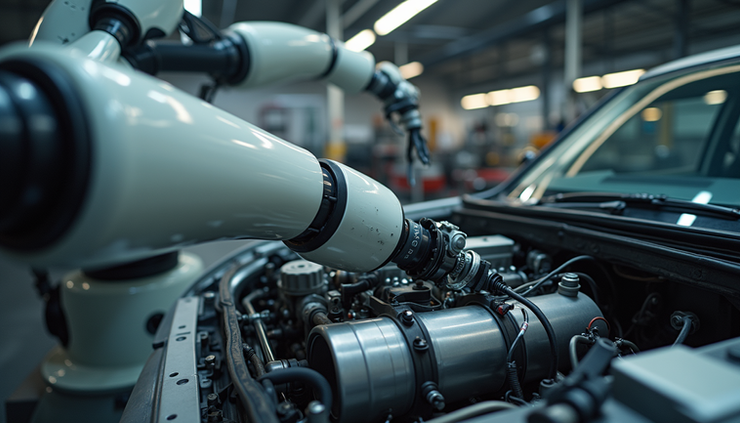
How AI is Changing the Mechanic Industry Today
AI and robotics have already entered automotive manufacturing and repair in several ways:
Automated diagnostics: AI systems analyze vehicle data to identify issues faster and more accurately than traditional methods.
Robotic assembly lines: Factories use robots for welding, painting, and assembling car parts, improving speed and precision.
Predictive maintenance: AI predicts when parts will fail, allowing mechanics to perform repairs before breakdowns occur.
Despite these advances, human mechanics still play a crucial role. Complex repairs, custom modifications, and customer service require skills machines cannot fully replicate yet. AI tools assist mechanics but do not replace them.
Will AI Fully Replace Mechanics?
Complete replacement of mechanics by AI is unlikely in the next decade. Here’s why:
Complex problem-solving: Many repairs need creative thinking and hands-on experience, which AI struggles to match.
Variety of vehicles: Older cars and custom vehicles pose challenges for automated systems designed mainly for standard models.
Human interaction: Customers value trust and communication, which machines cannot provide.
That said, AI will continue to take over routine tasks, reducing the demand for entry-level mechanic jobs. Skilled mechanics will need to adapt by learning to work alongside AI tools and focus on advanced repairs.
Can AI Manufacture Vehicles Independently?
Manufacturing is one area where AI and robotics have made the most progress. Many car factories already use robots for:
Welding and assembling parts
Painting and finishing
Quality control through AI-powered vision systems
However, full vehicle manufacturing without human oversight is still years away. Humans remain essential for:
Designing new models
Managing production lines
Handling unexpected problems
AI will increase efficiency and reduce labor costs but will not eliminate the need for human workers entirely.

How Many Years Until AI Can Take Over a Mechanic’s Job?
Experts estimate that AI could automate 30-50% of mechanic tasks within the next 10 to 15 years. This includes diagnostics, routine maintenance, and some repairs. Full automation of all mechanic roles is unlikely before 20-30 years, if ever.
The timeline depends on:
Advances in AI learning and dexterity
Adoption of standardized vehicle designs
Investment in AI-powered workshops
Currently, AI excels at repetitive, data-driven tasks but struggles with unpredictable, hands-on work.
Will We Be Poorer If AI Replaces Mechanic Jobs?
Job displacement often raises concerns about income and poverty. The impact depends on how society manages the transition:
Job loss risk: Entry-level mechanic jobs may decline, affecting workers without advanced skills.
New opportunities: AI creates demand for technicians who maintain and program AI systems.
Economic growth: Increased productivity can lower costs and create new industries.
Countries that invest in retraining workers and education tend to experience less economic hardship during automation shifts. Without support, some workers may face income loss.
What Will People Do If AI Takes Over Mechanic Jobs?
Workers displaced by AI will need to shift to roles that require human skills machines cannot replace. Possible job areas include:
AI system maintenance: Technicians who repair and update AI tools.
Customer service: Roles requiring empathy and communication.
Creative and strategic work: Designing new vehicles and technologies.
Skilled trades: Jobs involving complex manual skills beyond AI’s reach.
Lifelong learning and adaptability will be key for workers to stay relevant.
What Kinds of Jobs Will Exist in the Future?
The job market will evolve with AI, emphasizing:
Technical skills: Programming, robotics maintenance, and data analysis.
Human skills: Creativity, problem-solving, and interpersonal communication.
Hybrid roles: Combining AI knowledge with traditional trades.
Mechanics who embrace AI tools and upgrade their skills will find new opportunities. For example, some workshops already employ AI-assisted diagnostics, requiring mechanics to interpret AI results and make final decisions.

What Will Happen to Income Levels?
Income trends depend on several factors:
Skill level: Workers with AI and technical skills will likely see income growth.
Job availability: Reduced demand for low-skill mechanic jobs may lower wages in that segment.
Economic policies: Minimum wage laws, social safety nets, and retraining programs influence income stability.
Overall, income inequality could widen if displaced workers cannot access new opportunities. Governments and businesses must support workforce transitions to maintain income levels.
AI will transform mechanic jobs and the broader job market significantly in the next decade. While AI will automate many routine tasks, human mechanics will remain essential for complex repairs and customer interaction. Manufacturing will become more automated but still requires human oversight. Workers must adapt by learning new skills and embracing AI tools to stay relevant.


Comments