
Why Running a VIN Matters When Buying a Used Lexus IS350 2022
A used car can look clean, drive well, and still have a history that changes everything. That is why running the VIN before buying matters so much.
The VIN, short for Vehicle Identification Number, is the car’s fingerprint. Every car and truck has one. It stays with the vehicle for life, even if the license plate changes, the owner moves, or the vehicle gets sold across state lines. When you run a VIN, you are trying to answer one simple question before you spend your money:
What has this vehicle been through?
If you are looking at a 2022 Lexus IS350, that question matters even more. It is not just a basic commuter car. It is a luxury sport sedan with performance parts, advanced safety features, electronics, and repair costs that can add up fast. A small-looking accident, a branded title, or a mileage problem can turn a good deal into an expensive mistake.

What a VIN is and why every car or truck has one
A VIN is a 17-character code made up of letters and numbers. It is assigned by the manufacturer and identifies that exact vehicle. No two vehicles built for the same model year should have the same VIN.
You can usually find the VIN in a few places:
On the driver’s side dashboard near the windshield
On the driver’s side door jamb sticker
On the vehicle title
On the registration
On insurance documents
Sometimes under the hood or on body panels
For a 2022 Lexus IS350, the VIN can help confirm basic information such as the model year, manufacturer, body style, engine family, and where the vehicle was built. That matters because sellers can make mistakes, listings can be vague, and some vehicles are advertised in ways that make them sound better than they are.
Running a VIN is not only for luxury cars. It matters on any car or truck, from a work pickup to a family SUV. Trucks may have towing wear, fleet use, undercarriage damage, or commercial history. Cars may have accident records, flood damage, odometer issues, or title problems. The VIN helps connect the vehicle in front of you to records that may not be obvious during a quick test drive.
Why running a VIN matters before you buy
Buying used always comes with some risk. A VIN report does not remove all risk, but it can reduce surprises.
A vehicle history report can help you spot problems before you pay for a mechanic, arrange financing, or sign paperwork. It can also give you bargaining power if the car has a past that affects value.
Here are the biggest reasons to run a VIN before buying.
It can reveal accident and damage history
One of the most common questions is, “Would I know if it has been in an accident?”
Often, yes. If an accident was reported to an insurance company, police department, repair network, auction, or other data source connected to the report provider, it may show up on the VIN history report.
The report may include details such as:
Accident reported
Damage reported
Airbag deployment
Structural damage
Damage location, such as front, rear, left side, or right side
Severity level, if available
Total loss record, if applicable
For a Lexus IS350, accident history matters because the car has precise steering, suspension tuning, safety sensors, and body panels that need proper repair. Damage to the front end, for example, may affect radar sensors, headlights, cooling parts, bumper supports, and alignment. Rear damage may affect the trunk floor, rear suspension, exhaust, or parking sensors.
A car can be repaired well after an accident. The point is not that every accident makes a car bad. The point is that you should know what happened, how serious it was, and whether the price reflects that history.
It can show title problems
The title is one of the most important parts of a vehicle’s history. A clean title usually means the vehicle has not received a major brand from a state motor vehicle agency. A branded title can change the value, insurability, financing options, and future resale.
A VIN check may show title brands such as:
Salvage
Rebuilt
Flood
Lemon
Hail damage
Junk
Odometer discrepancy
Not actual mileage
A 2022 Lexus IS350 with a rebuilt or salvage title should be treated very differently from one with a clean title. It may still run and look good, but the market value is usually lower. Some lenders may not finance it. Some insurers may limit coverage. Future buyers may avoid it.
That does not always mean you should walk away, but it does mean you should slow down and ask more questions.

What information you can get from running the VIN
A VIN report pulls together records from different sources. Each report can look a little different, and no report is perfect, but the main categories are usually similar.
Basic vehicle details
The report should confirm the vehicle’s identity. For a 2022 Lexus IS350, you want the VIN report to match what the seller claims.
Look for:
Year
Make
Model
Trim or series, when available
Engine information
Body style
Drivetrain, when available
Fuel type
Assembly information
This helps you confirm that the vehicle is actually a 2022 Lexus IS350 and not a different trim, model year, or configuration.
It also helps catch listing errors. A seller may accidentally list the wrong trim or drivetrain. In some cases, a bad listing may be intentional. Either way, the VIN helps you verify the basics.
Ownership and usage history
A VIN report may show how many owners the vehicle has had and where it has been registered. It may also show whether the car was used as a personal vehicle, rental, lease, fleet vehicle, taxi, police vehicle, or commercial vehicle.
This matters because use affects wear.
A one-owner personal Lexus with regular service records is different from a vehicle that spent part of its life in rental or fleet use. Rental history does not automatically mean the car is bad, but it should change how carefully you inspect it.
For a 2022 model, the ownership pattern can be especially useful. If the car changed hands several times in a short period, ask why. Maybe there is a simple explanation. Maybe there is not.
Mileage and odometer readings
Mileage is one of the biggest factors in used car value. A VIN report may show odometer readings from service visits, inspections, title events, emissions testing, auctions, and registrations.
You want the mileage to move in a normal, steady direction.
Red flags include:
Mileage that drops from one record to the next
Large gaps with no records
A current odometer reading that seems too low for the pattern
A report label such as “not actual mileage”
For example, if a Lexus had 32,000 miles at one service visit and later shows 22,000 miles, something needs explanation. It could be a clerical error, but it could also point to odometer rollback or a replaced instrument cluster.
Service and maintenance records
Some VIN reports include maintenance history. This can be very helpful, especially on newer luxury cars.
You might see records for:
Oil changes
Tire rotations
Brake service
Battery replacement
Scheduled maintenance
Dealer service visits
Alignment work
Recall work
Not every shop reports service records, so a clean-looking gap does not prove the car was neglected. Still, reported service gives you a better picture of how the vehicle was cared for.
For a 2022 Lexus IS350, regular service is a good sign. It tells you the owner likely paid attention to basic care. If the car has high miles with almost no service history, ask for receipts or dealer records.
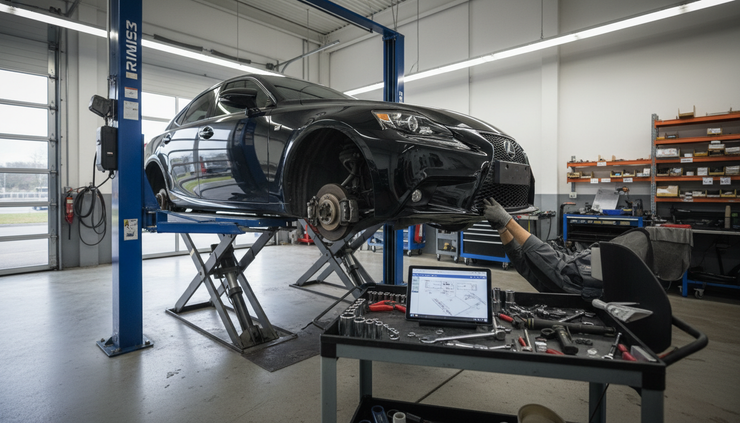
What a VIN report can tell you about a 2022 Lexus IS350
Let’s say you are buying a used 2022 Lexus IS350. The photos look sharp. The paint shines. The seller says it has a clean history. The test drive feels good.
Before you commit, running the VIN can help you answer these questions.
Has it been in an accident?
A VIN report may show whether an accident or damage event was reported. If it says the car had front-end damage, rear damage, side damage, airbag deployment, or structural damage, take it seriously.
Then compare the report to the car itself.
Look for signs such as:
Uneven panel gaps
Paint color that does not match from panel to panel
Overspray near trim, weatherstripping, or wheel wells
New headlights on one side only
Misaligned bumper covers
Warning lights on the dash
Steering wheel off-center during the test drive
Uneven tire wear
A minor bumper repair is not the same as structural damage. Airbag deployment is more serious than a scratched fender. The VIN report gives you a starting point, but a pre-purchase inspection gives you the real condition.
Does the title match what the seller says?
If the seller says the Lexus has a clean title, the VIN report should support that. If the report shows salvage, rebuilt, flood, or total loss history, stop and ask direct questions.
Flood history is especially serious. Water can damage wiring, modules, connectors, carpet padding, seat motors, sensors, and other electronics. A modern Lexus has many electronic systems. Water damage can create problems long after the car looks dry and clean.
If a title brand appears, do not rely only on the seller’s explanation. Review the title documents and consider having the car inspected by a mechanic who knows collision and flood signs.
Was it maintained well?
A Lexus IS350 is known as a quality vehicle, but quality does not replace maintenance. Even a well-built car needs proper oil changes, tires, brakes, fluids, filters, and inspections.
A VIN report may show dealer visits or service records. This helps you see whether the car received basic care. If the report is thin, ask the seller for maintenance receipts.
For a 2022 car, also check whether factory warranty coverage may still apply. Warranty depends on mileage, time, title status, and other factors. A branded title or certain types of damage can affect coverage, so confirm with a Lexus dealer using the VIN.
Are there open recalls?
You can use the VIN to check recall status. Recalls are safety or compliance repairs issued by the manufacturer and handled through authorized dealers.
An open recall does not always mean the car is unsafe to drive that day, but it is something you should know before buying. Ask if the recall work has been completed. If not, contact a Lexus dealer and confirm the next steps.
A VIN report is powerful, but it has limits
A VIN report is one of the best tools you have, but it is not a crystal ball.
Some accidents never show up. A seller may repair damage privately and never file an insurance claim. A small shop may not report repairs. A police report may not connect to the history provider. Records can also be delayed, incomplete, or entered incorrectly.
That means a vehicle with “no accidents reported” is not the same as a vehicle that has never been damaged.
Read that phrase carefully. It usually means no accident is shown in the data available to that report provider. It does not guarantee a perfect history.
That is why the best buying process includes both:
Run the VIN
Inspect the vehicle
Check records, title history, accidents, mileage, ownership, recalls, and service information.
Look for physical signs of damage, poor repairs, worn parts, leaks, warning lights, and drivability issues.
If the VIN report and the physical condition tell the same story, you can feel more confident. If they do not match, slow down.
How to use the VIN before buying
Do not wait until you are sitting in the finance office. Ask for the VIN early.
Use this simple process.
Get the VIN from the seller
Ask the seller to send the full 17-character VIN. If the seller refuses, that is a red flag. There are normal reasons to protect personal information, but the VIN itself is needed to verify the vehicle.
When you see the car in person, make sure the VIN on the dashboard matches the VIN on the listing, title, registration, and door jamb.
Run the report before negotiating
Run the VIN before you agree on a final price. If the report shows accident history, title issues, rental use, or mileage concerns, that information affects value.
For example, a clean-title 2022 Lexus IS350 with consistent service records is worth more than a similar one with reported structural damage. A car with a branded title should be priced very differently from one with no title issues.
Compare the report with the seller’s story
If the seller says “never been hit” but the report shows damage, ask about it. If the seller says “one owner” but the report shows multiple owners, ask why. Sometimes records are wrong, but sometimes the seller is leaving things out.
The goal is not to argue. The goal is to make sure the facts line up before you buy.
Get a pre-purchase inspection
Even if the VIN report looks clean, hire a trusted mechanic to inspect the car. For a Lexus IS350, ask the inspector to check body repair signs, suspension, brakes, tires, leaks, electronics, diagnostic codes, and undercarriage condition.
A good inspection can find issues a report cannot.

Red flags to watch for on a used Lexus IS350
A VIN report can help you spot problems before you get emotionally attached to the car.
Be careful if you see:
Salvage or rebuilt title
Flood or water damage history
Airbag deployment
Structural damage
Odometer discrepancy
Multiple owners in a short time
Recent auction sale after damage
Long mileage gaps
Open recalls with no repair plan
Seller story that does not match the records
None of these automatically proves the car is a bad buy, but each one should change your decision. Some issues mean you should negotiate harder. Some mean you should pay for a deeper inspection. Some mean you should walk away.
A clean 2022 Lexus IS350 can be a great used car. The wrong one can be expensive to own, hard to insure, difficult to resell, or unsafe after poor repairs.
The smartest way to buy is to verify first
Running a VIN matters because it brings hidden history into the open. It helps you see accident records, title brands, mileage patterns, ownership history, service records, possible recalls, and warning signs that may not show up in photos.
If you are buying a used Lexus IS350 2022, do not rely only on the seller’s word, the shine of the paint, or a smooth test drive. Run the VIN, read the report carefully, compare it with the car, and get a pre-purchase inspection.
A VIN check may not tell you everything, but it can tell you enough to avoid the wrong car, ask better questions, and buy with far more confidence.


Comments