
Which Automakers Build the Most Durable Electronics: Japanese, American, or European?
The most reliable car electronics usually come from the brands that resist the urge to overcomplicate them. That is why Toyota and Lexus often sit at the top of the durability conversation, with Honda close behind. Some American trucks and SUVs also do very well, especially when they use proven parts for many years. European brands can build excellent electronics, but they often pack in more features, more modules, and tighter packaging, which gives owners more to maintain as the vehicle ages.
That is the short answer. The real answer is more interesting, because “durable electronics” is not just about the country on the badge. It is about design philosophy, supplier quality, heat control, wiring protection, software stability, and how long a company keeps a system in production before replacing it.

What makes automotive electronics last?
Car electronics live a hard life. A laptop sits on a desk. A vehicle control module may spend years near engine heat, road salt, moisture, vibration, dust, and sudden voltage changes.
Durable automotive electronics usually have a few things in common:
Conservative design
The system does not run near its thermal or electrical limits.
Good sealing
Moisture is one of the biggest killers of connectors, sensors, and circuit boards.
Stable suppliers
Automakers that keep using proven parts often avoid early failure patterns.
Simple architecture
Fewer modules and fewer software dependencies mean fewer failure points.
Strong diagnostics
A good system can detect faults early and avoid damaging related components.
The weakest points are often not the computer chips themselves. Failures usually come from connectors, solder joints, grounds, wiring harness damage, water intrusion, weak batteries, heat-soaked modules, and aging capacitors.
A well-built electronic module may last 20 years. A poorly located one can fail in five.
Japanese automakers tend to favor proven electronics
Japanese brands, especially Toyota and Lexus, have a strong reputation for electronics that age well. Honda, Mazda, and Subaru have also built many durable systems, though each has had model-specific issues over the years.
The main strength of many Japanese automakers is restraint. They often introduce new features slowly, test them heavily, and keep proven designs in service for years. That can make the cars feel less flashy when new, but easier to live with when old.
Toyota is a good example. Many Toyota and Lexus vehicles use electronics that are boring in the best way. Switchgear feels simple. Climate controls often stay physical for a long time. Powertrain control systems tend to be conservative. The brand rarely rushes to add complex features just to appear first.
Honda traditionally did well with engine control electronics, simple interior switchgear, and clean wiring layouts. Some modern Hondas have more infotainment and driver-assist complexity than older models, but the brand still tends to use practical engineering.
Subaru is a mixed case. The electronics are often straightforward, but the brand’s all-wheel-drive systems, sensors, and newer safety tech add more complexity. Mazda has improved a lot in perceived quality and electronic design, especially by keeping interiors functional rather than turning everything into a screen.
Best general bet for long-lasting electronics: Toyota and Lexus.
That does not mean every Toyota is perfect. It means the company’s overall approach tends to produce fewer electronic headaches over a long ownership period.
American automakers are strongest in trucks and simple platforms
American brands have a different pattern. Ford, General Motors, and Stellantis have built vehicles with very durable electronics, especially full-size trucks, vans, and body-on-frame SUVs. They have also built vehicles with frustrating electrical issues.
The best American electronics are often found in models that use proven systems for many years. A full-size pickup may keep the same basic wiring strategy, switches, control modules, and powertrain electronics across long production runs. That gives engineers and suppliers time to fix weak points.
Ford and GM trucks from certain eras are known for being repairable and well supported. Parts availability is usually good, especially in the United States. Independent shops understand them. Used modules, replacement harnesses, and common sensors are easier to find than parts for some lower-volume imports.
Where American brands sometimes struggle is consistency. A drivetrain control module may be excellent, while the infotainment system, door module, or body control module causes trouble. Large option lists also add complexity. Two versions of the same model can have very different electronic loads depending on trim level.
American automakers also tend to move quickly when market demand shifts. Big screens, connected services, digital clusters, and feature-heavy interiors can arrive fast. That can create rough edges in early model years.
Best general bet among American vehicles: simpler trucks and SUVs from Ford or GM with mainstream engines and fewer luxury options.
European automakers build advanced electronics, but complexity raises the risk
European brands often lead in features. Mercedes-Benz, BMW, Audi, Volkswagen, Volvo, and Porsche have used advanced electrical systems for decades. They helped popularize high-end infotainment, adaptive suspensions, complex lighting, networked modules, and powerful driver-assist systems.
That makes them impressive when new. It can also make them expensive as they age.
European vehicles often use more modules than comparable Japanese or American vehicles. A luxury sedan may have separate control units for seats, doors, lighting, suspension, steering, braking, infotainment, battery management, climate zones, cameras, radar, and security. Many of these modules communicate through networks such as CAN, LIN, FlexRay, Ethernet, or MOST, depending on the vehicle and era.
When one module has low voltage, water damage, or a software fault, it can cause symptoms that seem unrelated. A weak battery may trigger warning lights across multiple systems. A failed door handle sensor may affect central locking, alarm behavior, and keyless entry.
European electronics are not “bad” by default. Many are high quality. The challenge is that they are dense, feature-rich, and expensive to diagnose. They also often sit in tight engine bays or cabin areas where heat and moisture can add stress.
Porsche is often better than many luxury rivals in long-term electronic durability, partly because it tends to engineer systems carefully and because many owners maintain the cars well. Mercedes-Benz and BMW have strong engineering, but their feature load can make older examples risky. Volkswagen and Audi can be solid, but model and year matter a lot.
Best general bet among European vehicles: lower-option models with simpler engines, clean maintenance history, and no water intrusion.
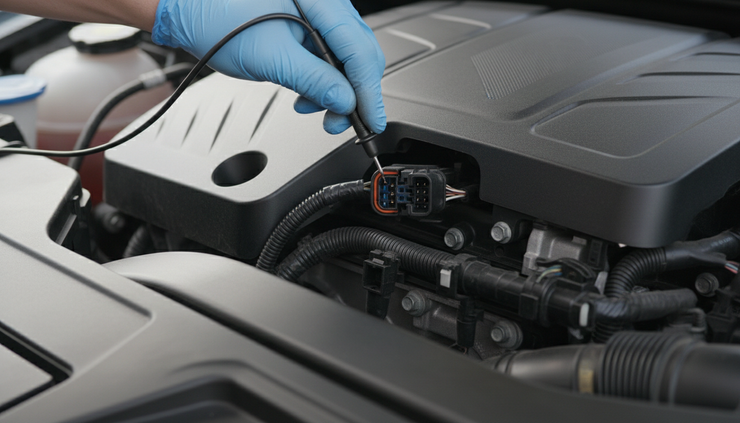
How Japanese, American, and European electronics differ
The country comparison is useful, but it can become too simple. Most automakers buy parts from global suppliers. Bosch, Denso, Continental, Aisin, Hitachi Astemo, Aptiv, Yazaki, Sumitomo, Panasonic, and many others supply electronics across regions.
A Japanese car may use a German sensor. An American truck may use Japanese connectors. A European car may use wiring made by a global supplier in several countries.
The differences come from how each automaker specifies, tests, packages, and updates the parts.
Region | Common strength | Common weakness | Long-term ownership takeaway |
Japanese | Conservative design and proven suppliers | Some models lag in features or use dated interfaces | Usually the safest bet for low electronic drama |
American | Strong parts support and durable truck electronics | Quality can vary by model, trim, and year | Best when the vehicle is simple and widely sold |
European | Advanced systems and high feature content | More modules, tighter packaging, higher repair cost | Buy carefully and avoid neglected examples |
Japanese automakers often place durability ahead of novelty. American automakers often balance cost, serviceability, and market demand. European automakers often prioritize performance, features, and refinement.
None of those approaches is wrong. They just age differently.
The materials that matter in automotive electronics
Electronic durability depends heavily on materials. A control unit is not just a chip in a box. It is a collection of conductors, insulators, seals, coatings, solder, plastics, metals, and fasteners that must survive years of abuse.
Wiring insulation
Automotive wiring commonly uses insulation materials such as PVC, cross-linked polyethylene, and other heat-resistant plastics. Higher-temperature areas may use more specialized insulation. The goal is to resist heat, oil, abrasion, and cracking.
As vehicles age, brittle insulation can cause shorts or intermittent faults. Rodent damage can also destroy a harness, no matter how well it was built.
Connectors and terminals
Good connectors use tight terminal fit, corrosion-resistant plating, strong locks, and seals where moisture is likely. Many connector failures come from small amounts of corrosion, loose pins, or broken locking tabs.
Gold plating may appear in low-current signal circuits where reliable contact matters. Tin plating is common in many other terminals. The exact choice depends on cost, current, environment, and expected lifespan.
Circuit boards and coatings
Control modules use printed circuit boards with soldered components. Many automotive boards use conformal coating or potting compounds to protect against moisture and vibration. A sealed housing with a good gasket can make a huge difference.
Heat remains a major enemy. Engine control modules placed in hot engine bays need careful thermal design. Aluminum housings can help shed heat. Plastic housings reduce cost and weight, but they must be shaped and sealed well.
Sensors and housings
Modern cars use oxygen sensors, wheel speed sensors, crankshaft sensors, radar units, cameras, pressure sensors, temperature sensors, and more. Their housings may use plastic, stainless steel, aluminum, ceramics, silicone seals, and glass-filled polymers.
A sensor can fail because the internal electronics die, but it can also fail because the housing cracks, the wire chafes, or the connector corrodes.
Solder and capacitors
Older electronics used lead-based solder. Modern electronics use lead-free solder because of environmental rules. Lead-free solder can be very reliable when designed and manufactured correctly, but it often requires tighter process control.
Capacitors are another aging point. Heat dries them out over time. That is one reason modules located away from heat tend to last longer.
The best era for durable car electronics
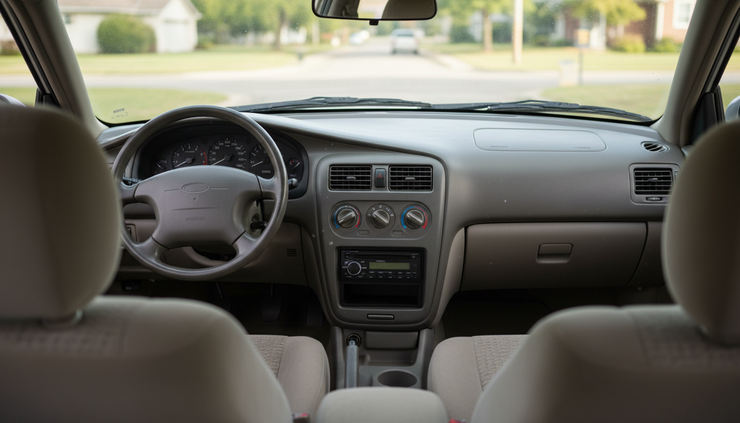
The strongest era for long-lasting automotive electronics was likely the late 1990s through the mid-2000s.
That period hit a sweet spot. Cars had modern fuel injection, reliable engine computers, better diagnostics, anti-lock brakes, and improved build quality. At the same time, many had simple radios, physical controls, fewer networked modules, and fewer software-driven features.
A 2003 Toyota Camry, a 2005 Lexus ES, a 2004 Honda Accord, or a basic mid-2000s pickup may have enough electronics to run cleanly and safely, but not so many that every feature depends on a chain of modules.
Earlier cars from the 1980s and early 1990s can be simple, but their electronics may suffer from primitive sensors, early fuel injection quirks, aging capacitors, weak solder joints, and poor diagnostics. Newer cars are safer and cleaner, but they rely on far more software and communication between modules.
The late 1990s to mid-2000s were not perfect. Airbag systems, immobilizers, ABS modules, and early navigation units could still fail. But for many vehicles, that era offered the best balance of reliability, simplicity, and usefulness.
Are cars too complicated today?
Yes, in some ways. Modern cars are often too complicated for long-term low-cost ownership.
A current vehicle may include:
Adaptive cruise control
Lane keeping assistance
Blind spot monitoring
Automatic emergency braking
Touchscreen climate controls
Over-the-air software updates
Multiple cameras
Radar sensors
Digital instrument clusters
Electronic shifters
Battery management systems
Telematics modules
Stop-start systems
Active grille shutters
Electronic parking brakes
Many of these features are useful. Some improve safety. Some improve fuel economy. Some are required or encouraged by regulation and consumer demand.
The problem is the sum of it all. Every new feature adds wiring, sensors, software, calibration, and diagnostic steps. A simple bumper repair can require radar calibration. A windshield replacement may involve camera recalibration. A weak battery can trigger warnings that look like major failures.
Touchscreens add another concern. Physical buttons can last decades and are easy to use by feel. A failed screen can affect audio, navigation, climate control, vehicle settings, cameras, and phone connection. That is a lot of control tied to one part.
Software also changes the ownership experience. Older cars usually failed in mechanical ways. Newer cars can have bugs, updates, compatibility problems, and module communication faults. Repair now requires scanners, subscriptions, calibration tools, and trained technicians.
That does not mean modern vehicles are worse. They are safer, cleaner, more powerful, and more efficient than older cars. But long-term electronic durability has become harder to predict.
Which brands are the safest choices?
If the question is which automotive brand has the longest-lasting electronics overall, the safest answer is Toyota, with Lexus close beside it. Honda is also a strong choice, especially in simpler trims and proven model years.
A practical ranking by general electronic durability would look like this:
Toyota and Lexus
Best overall mix of conservative design, supplier quality, and long-term durability.
Honda and Acura
Strong electronics history, though newer infotainment systems and turbo-era complexity vary by model.
Mazda
Often simple, well-built, and less overloaded with unnecessary features.
Ford and GM trucks and SUVs
Durable when simple, easy to service, and supported by a huge parts network.
Porsche
Often better than many European luxury brands, but repair costs remain high.
Mercedes-Benz, BMW, Audi, and Volkswagen
Capable of excellent engineering, but complexity and maintenance history matter a great deal.
This is not a rule for every vehicle. A neglected Toyota with water leaks can be worse than a well-kept Mercedes. A basic Ford truck can be far less troublesome than a feature-loaded luxury SUV from any country.
The best long-term electronic reliability usually comes from a simple vehicle, a proven drivetrain, fewer luxury options, and a dry, clean history.
How to choose a car with durable electronics
The badge matters, but the exact vehicle matters more. Before buying, look for signs that the electronics have had an easy life.
Choose:
A mainstream model with a long production run
A naturally aspirated engine when possible
Fewer luxury options
Physical controls for common functions
A clean interior with no water smell
No warning lights on the dash
A strong, properly sized battery
Service records showing regular maintenance
No history of flood damage or major electrical repair
Be careful with:
First model years after a redesign
Complex air suspensions
Early versions of new infotainment systems
Heavy aftermarket wiring
Cars with many disconnected features
Vehicles that have lived in flood-prone or high-corrosion areas
Luxury models with every available option
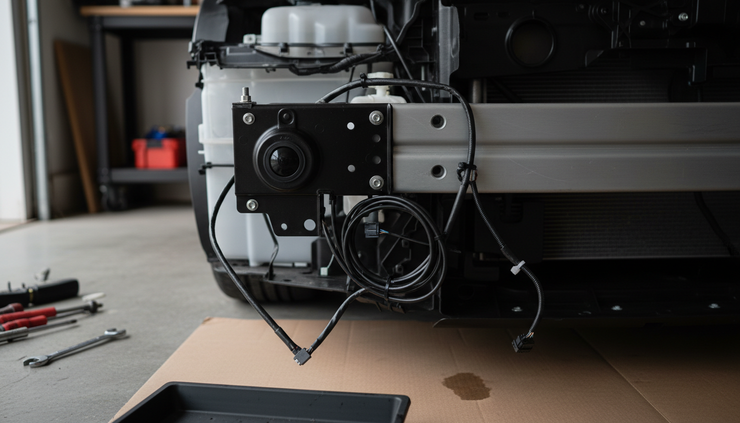
A pre-purchase inspection should include a scan of all modules, not just the engine computer. Many electrical faults hide in body, airbag, ABS, transmission, and infotainment modules before they show up as major symptoms.
The real winner is simple, proven design
Japanese automakers, led by Toyota and Lexus, have the best overall reputation for long-lasting electronics. American automakers can be excellent, especially with simple trucks and SUVs. European automakers often build the most advanced systems, but those systems can become expensive and complex with age.
The best era was probably the late 1990s through the mid-2000s, when cars had mature electronic controls without being ruled by screens and software.
Cars today are not doomed, but they are more complicated than many owners need. If long-term reliability is the goal, skip the flashiest trim, avoid first-year technology, and choose the vehicle that does the basics well. The most durable electronics are usually the ones you barely notice.


Comments