
What Happens to US Automakers if the Dollar Collapses and Will the Big Three Go Bankrupt
A dollar collapse would hit American automakers fast, but not in one simple way. It would raise costs, shake up car prices, stress suppliers, and make financing harder. At the same time, it could make some US-built vehicles more competitive overseas.
That mix is why the answer is not as simple as “the Big Three go bankrupt.” Ford, General Motors, and Stellantis’ US operations would face serious pressure. Some parts of their businesses could be hurt badly. Other parts might benefit from a weaker dollar. The outcome would depend on how the collapse happens, how long it lasts, and whether the credit system keeps working.
This article is informational only and should not be taken as financial advice.
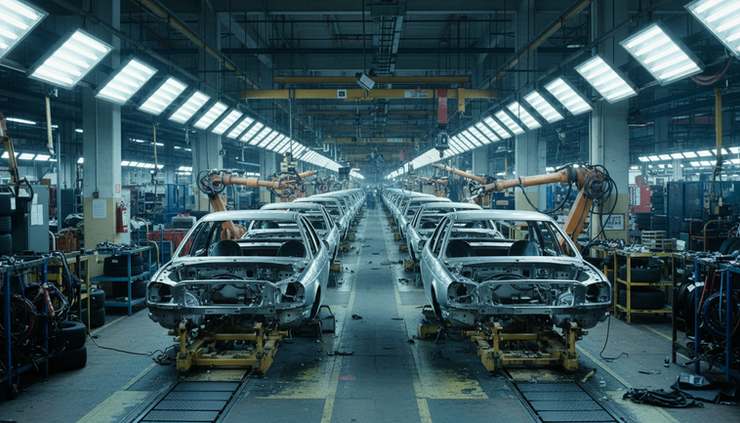
A dollar collapse would not be just a weaker exchange rate
People use “dollar collapse” to mean different things. That matters.
A normal dollar decline is common. The dollar rises and falls against other currencies all the time. A dollar collapse would be much more severe. It would mean a sudden loss of confidence in the US dollar as a store of value and as a currency used for trade, savings, and debt.
That could show up in several ways:
A sharp fall in the dollar against other major currencies
High inflation, especially for imported goods
Higher interest rates as lenders demand more protection
Trouble rolling over debt
A rush into hard assets, foreign currencies, or commodities
Possible government and central bank emergency actions
For automakers, the most dangerous version is not just a cheaper dollar. The real threat is a broader financial shock where inflation spikes, credit freezes, and consumers pull back from large purchases.
Cars and trucks are not impulse buys. Most buyers depend on financing. Automakers depend on suppliers, parts shipments, dealer networks, and large pools of credit. If the currency breaks down badly enough to damage those systems, the auto industry gets hit from several directions at once.
Costs would jump before any export benefit shows up
A weaker dollar can help exporters because US-made goods become cheaper for foreign buyers. In theory, that sounds good for American automakers. A US-built pickup, van, or SUV could look cheaper in Europe, Latin America, or the Middle East when priced in local currency.
But automakers are not pure exporters. They are global manufacturers with global supply chains.
Even vehicles assembled in Michigan, Ohio, Kentucky, Texas, or Missouri contain parts, chips, materials, tooling, and equipment linked to foreign suppliers. Some parts cross borders more than once before a finished vehicle reaches a dealer lot.
If the dollar collapsed, imported inputs would become more expensive. That includes:
Semiconductors and electronic modules
Specialty steel and aluminum products
Battery materials and components
Machine tools and factory equipment
Rubber, plastics, sensors, and wiring parts
Parts sourced from Mexico, Canada, Asia, and Europe
The US auto market is deeply tied to Canada and Mexico through decades of regional production. A vehicle may be designed in one country, use parts from another, and be assembled in a third. A dollar collapse would make this web more expensive and harder to manage.
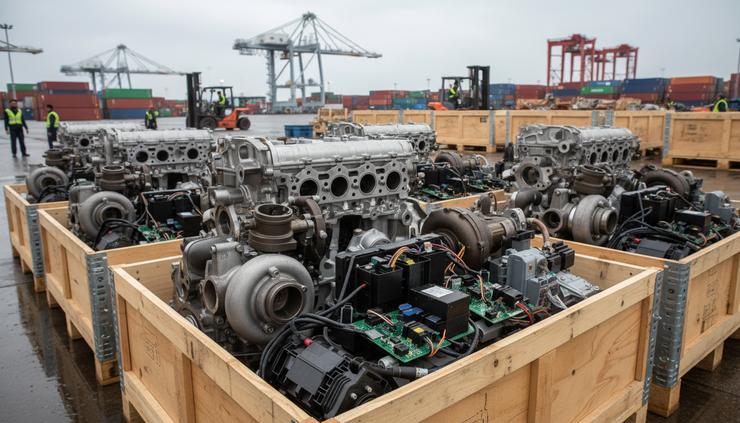
The squeeze would be painful because automakers cannot always pass higher costs on to buyers. If the price of an average vehicle rises too much, demand falls. If companies hold prices down, profit margins shrink.
That creates a brutal choice:
Raise prices and risk losing customers
Hold prices and eat higher production costs
Cut features or delay models
Shift more production to lower-cost locations
Ask suppliers to absorb losses, which many could not do
Suppliers may be the weakest link. Large automakers have more cash, better access to credit, and more political importance. Smaller suppliers often run on thinner margins. If suppliers fail, the Big Three can be forced to stop production even if their own factories are ready to run.
A modern assembly plant cannot build a truck if one critical chip, wiring harness, seat mechanism, or transmission part is missing.
Car buyers would feel the shock through prices and loans
The biggest short-term hit would likely come from the consumer side.
A currency collapse would probably raise the prices of imported goods and commodities. That would reduce household purchasing power. People would spend more on food, fuel, rent, and essentials. A new car would become easier to delay.
Even if wages rose later, they might lag behind prices. That lag hurts big-ticket purchases.
Then comes the financing problem. Most new vehicles in the US are bought with loans or leases. If lenders fear inflation and currency instability, they demand higher rates. A higher auto loan rate can add a lot to the monthly payment, even if the vehicle price stays the same.
Higher monthly payments would pressure demand for:
Entry-level cars
Midsize SUVs
Full-size pickups
Commercial vans
Electric vehicles with higher upfront prices
The Big Three depend heavily on trucks and SUVs for profit. Those vehicles often have stronger margins than small cars. If buyers delay expensive pickups and SUVs, profits could fall faster than unit sales.
Dealers would also feel the stress. They finance inventory through floorplan lending. If borrowing costs jump, carrying vehicles on the lot becomes more expensive. Dealers may order fewer units. Automakers may cut production. Workers may face reduced hours or temporary shutdowns.

A weaker dollar could also raise gasoline prices if global oil markets price crude in dollars and sellers demand more dollars for the same barrel. Higher fuel costs can change what buyers want. Large trucks and SUVs might become harder to sell unless buyers need them for work.
Electric vehicles are not automatically safe either. Battery supply chains depend on minerals, cells, and equipment that are globally traded. If imported battery components surge in price, EV margins could come under pressure too.
The Big Three would not face the same risks
Ford, General Motors, and Stellantis are often grouped together, but they do not have identical exposure.
Ford has a major global business, a large truck franchise, and financial services exposure through auto lending. GM has large North American operations, a major pickup and SUV business, and important technology and EV commitments. Stellantis is more globally diversified, with major brands and operations outside the US, though its American brands remain tied to the US market.
A dollar collapse would affect each company through a different balance of costs, revenue, debt, and geography.
Pressure point | Why it matters for the Big Three |
Imported parts | A weaker dollar makes foreign-sourced parts more expensive |
Domestic production | US-built vehicles may become more attractive abroad |
Auto loans | Higher rates can reduce sales quickly |
Supplier health | Parts shortages can stop assembly lines |
Foreign earnings | Revenue earned overseas may look stronger when converted back into dollars |
Debt costs | Refinancing becomes harder if rates spike |
Labor costs | Wage demands may rise during inflation |
Government policy | Tariffs, subsidies, bailouts, and emergency rules could change the outcome |
The foreign earnings point deserves attention. A US company with sales and profits in stronger foreign currencies may report better dollar results after translation. That can help on paper and sometimes in cash flow.
But accounting gains do not solve factory-level problems. If US consumers stop buying, suppliers fail, or interest rates crush financing, foreign currency translation will not be enough.
The Big Three also have a history with crisis. GM and Chrysler went through bankruptcy during the 2008 to 2009 financial crisis. Ford avoided bankruptcy but still faced severe pressure. That history matters because it shows two things at once.
Bankruptcy is possible for major automakers.
Bankruptcy does not always mean the company disappears.
In the auto industry, bankruptcy can be a restructuring process. A company may shed debt, close plants, change contracts, receive government support, and keep operating. That is very different from liquidation, where the company shuts down and sells assets.
Bankruptcy would depend on credit, cash, and government action
So, will the Big Three go bankrupt if the dollar collapses?
Not automatically.
A dollar collapse would raise the risk of bankruptcy, but the trigger would likely be a cash and credit crisis rather than the exchange rate alone.
Automakers go bankrupt when they cannot meet obligations. Those obligations include supplier payments, debt payments, payroll, pension-related costs, lease commitments, warranties, and financing needs. If the market still trusts them and banks still lend, they may survive a very ugly period. If credit dries up, even a large company can run into trouble fast.
The most dangerous chain reaction would look like this:
The dollar falls sharply and inflation rises.
Interest rates jump.
Vehicle loans become expensive.
Consumers delay purchases.
Sales fall and inventories rise.
Suppliers demand faster payment or fail.
Automakers burn cash while production slows.
Debt refinancing becomes difficult.
Bankruptcy or government support becomes a real possibility.
Government action would be a major factor. The US auto industry is politically and economically important. It supports factory jobs, supplier jobs, dealerships, logistics firms, and local tax bases. In a true dollar crisis, the federal government would likely act in some way, though the form is impossible to predict.
Support could include emergency lending, tax relief, purchase incentives, supplier aid, trade measures, or direct restructuring support. It could also come with strict conditions.
That does not mean shareholders would be protected. In a severe restructuring, stockholders can be wiped out or heavily diluted. Bondholders, unions, suppliers, dealers, and governments all fight over losses. The company may survive while investors do not.
This is the key difference:
The brands may survive even if the old corporate structure does not.
Ford trucks, Chevrolet vehicles, Jeep SUVs, Ram pickups, and other major nameplates would still have value. Factories, dealer networks, patents, and skilled workers would still have value. A collapse in the dollar would not erase the need for transportation.
But it could force painful changes in who owns the companies, where they build vehicles, what models they sell, and how many workers they employ.

The likely outcome would be messy rather than total collapse
A dollar collapse would be one of the most serious shocks US automakers could face. It would make imported parts more expensive, raise vehicle prices, damage consumer financing, and put suppliers under strain. It could also help some exports and boost the dollar value of foreign earnings.
That is why the result would probably be uneven.
The strongest companies and product lines would survive. High-margin trucks, commercial vehicles, repair parts, and essential fleet sales may hold up better than discretionary purchases. Weak suppliers, overextended dealers, and unprofitable model lines would be at greater risk.
The Big Three could go bankrupt in a severe enough dollar crisis, especially if credit markets froze and consumer demand collapsed. But bankruptcy would not be guaranteed, and it would not necessarily mean the end of the companies. More likely, a true crisis would bring a mix of price hikes, production cuts, government intervention, restructurings, and a push to localize more of the supply chain.
The simple answer is this: a dollar collapse would not kill US automaking overnight, but it could force the industry into its hardest reset since the Great Recession. The companies most likely to survive would be the ones with cash, pricing power, flexible factories, strong supplier relationships, and vehicles people still need when money gets tight.


Comments