
Reconditioning Batteries vs Buying New Save Money on Car and Laptop Power. check out the link!!!!
A weak battery can feel like a surprise bill. One day the car cranks slowly, or the laptop drops from 40% to dead in minutes. The next day, replacing it looks like the only option.
New batteries are sometimes the right choice, especially when a battery is damaged, swollen, leaking, or far past its service life. But many “dead” batteries are not truly dead. Some have sulfation, imbalance, memory-like behavior, poor calibration, or simple neglect. That is where battery reconditioning becomes worth a serious look.
Reconditioning aims to bring useful capacity back to an aging battery instead of sending it straight to the recycling pile. For car batteries and some laptop batteries, it can save real money, reduce waste, and teach a practical skill that pays off more than once.
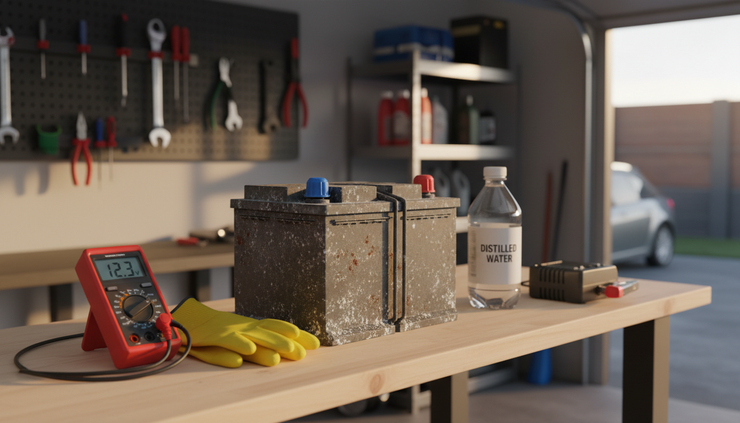
Why batteries fail before they are truly finished
Most people think of a battery as either alive or dead. In real life, battery health falls on a spectrum.
A battery may still have usable life left, even if it performs poorly. The reason depends on the chemistry and the way it was used.
Car batteries are usually lead-acid batteries. Over time, lead sulfate crystals can build up on the plates. This process, called sulfation, makes it harder for the battery to hold and deliver a charge. Sulfation often happens when a vehicle sits unused, the battery stays partly discharged, or the charging system does not keep it topped up.
Laptop batteries are usually lithium-ion packs. They do not recondition in the same way as lead-acid batteries. A laptop battery may act weak because its internal battery management system is poorly calibrated, because the cells are out of balance, or because the cells have aged. In some cases, careful cycling and calibration can improve how accurately the laptop reports charge and how consistently it runs.
That difference matters. Reconditioning is not one magic trick for every battery. It is a set of methods based on battery type, condition, and safety.
A good reconditioning process starts with testing:
Check the battery type and voltage.
Inspect for swelling, leaks, cracks, corrosion, or heat damage.
Measure voltage before charging.
Charge slowly with the proper charger.
Test whether the battery can hold a useful charge afterward.
If the battery fails basic safety checks, skip reconditioning. Recycle it properly and replace it.
How reconditioning can save money on car batteries
Car batteries have become expensive enough that even one successful reconditioning can feel worthwhile.
As a broad US retail example, a new replacement car battery from stores like AutoZone or Advance Auto Parts often costs around $150 to $250 or more, depending on the battery group size, brand, cold cranking amps, warranty, and vehicle. Some batteries cost less, and premium AGM batteries can cost more. Taxes, core charges, and installation policies can also affect the final bill.
Reconditioning costs are usually much lower if the battery is a good candidate. Many people already own some of the basic tools. Others can buy them once and use them on multiple batteries.
Battery option | Typical cost range | What affects the cost | Best fit |
New car battery from a store like AutoZone or Advance Auto Parts | About $150 to $250+ | Battery size, warranty, brand, AGM vs flooded lead-acid, taxes, core charge | Battery is damaged, very old, or cannot hold charge |
Car battery reconditioning at home | Often under $50 if tools are already available | Charger type, tester, safety gear, distilled water for serviceable batteries | Battery is weak from sulfation or long storage |
Buying tools for first-time reconditioning | Often $40 to $100+ | Multimeter, smart charger, hydrometer for flooded batteries, safety equipment | People who plan to test and restore more than one battery |
The savings grow when reconditioning works on more than one battery. A smart charger, multimeter, and safety gear are not single-use purchases. They can help maintain lawn tractor batteries, motorcycle batteries, marine batteries, backup power batteries, and other compatible lead-acid batteries.
Still, reconditioning has limits. A car battery with a shorted cell, broken internal plate, cracked case, or severe age-related damage usually will not recover enough to trust. If a battery is needed for daily commuting, winter starts, or long trips, test it carefully before relying on it.
A practical middle ground is to recondition the battery, then load-test it. If it passes and holds voltage well, it may be useful again. If it fails, the reconditioning attempt still teaches you something and confirms that replacement is the safer choice.

Laptop batteries can be trickier but still worth checking
Laptop batteries are different from car batteries, and the savings story is different too.
A replacement laptop battery can range from roughly $30 to $150 or more, depending on the laptop model, whether the part is aftermarket or original equipment, and how hard it is to access. Some slim laptops require opening the case, removing screws, and handling fragile connectors. In those cases, repair shop labor can raise the total cost.
Laptop battery “reconditioning” often means one of three things:
Recalibrating the battery gauge so the laptop reports charge more accurately.
Running controlled charge and discharge cycles to improve consistency.
Rebuilding or replacing cells inside a pack, which is much more advanced and can be dangerous.
For most people, the first two are the safest. A laptop that shuts down suddenly may not always have a completely failed battery. Sometimes the operating system and battery management system have lost track of the true charge level. A careful calibration cycle can help the laptop read capacity more accurately.
A simple calibration-style approach often looks like this:
Fully charge the laptop.
Let it rest on the charger for a bit after reaching 100%.
Use the laptop normally until the battery runs low.
Avoid forcing it into deep discharge beyond the system’s safe shutdown.
Charge it back to 100% without interruption.
This may not restore lost chemical capacity, but it can make battery readings more reliable. If the laptop still dies quickly afterward, the cells are likely worn out.
Be careful with lithium-ion batteries. Do not open a swollen, punctured, hot, or leaking laptop battery. Do not try to revive a battery pack that shows physical damage. Lithium-ion cells can catch fire if mishandled. For damaged packs, replacement and proper recycling are the right move.
What the EZ Battery Reconditioning method offers
The EZ Battery Reconditioning method is a popular guide-based approach for people who want structured instructions instead of random tips from forum threads. Its main appeal is that it explains battery restoration in plain steps, with methods organized by battery type.
The value comes from three things.
It gives beginners a clear starting point
Battery work can feel confusing at first because different batteries need different handling. A car battery, laptop battery, golf cart battery, and rechargeable tool battery do not all follow the same process.
The EZ Battery Reconditioning method helps by walking users through the basics:
How to identify common battery types.
How to test whether a battery is worth trying to restore.
Which tools are needed for common jobs.
How to charge and cycle batteries safely.
When to stop and replace the battery instead.
That structure matters. Many failed DIY attempts happen because someone applies the wrong method to the wrong battery.
It focuses on low-cost tools and repeatable steps
The method is built around tools that many home users can understand and reuse, such as a multimeter, charger, and basic safety gear. For lead-acid batteries, the guide often centers on testing, cleaning, controlled charging, and steps intended to reduce the effects of sulfation when the battery is a suitable candidate.
For laptop batteries, the sensible part of any reconditioning method is more conservative. Gauge calibration and controlled cycling may help in some cases, but opening lithium-ion packs is not a beginner task. A good guide should make that distinction clear.
It can be effective when the battery is a good candidate
Reconditioning works best when the battery is weak, neglected, or sulfated, not physically destroyed. A battery that sat discharged for a few months may respond better than one that spent years in hard service.
That is why expectations matter. EZ Battery Reconditioning can be useful and easy to follow, but no method can turn every dead battery into a reliable one. Think of it as a way to test and possibly recover value before spending money on a replacement.
The best reconditioning result is not always a “like new” battery. Sometimes the win is getting enough dependable use to delay replacement, power a secondary device, or confirm that recycling is the right choice.

The environmental benefit is hard to ignore
Every battery has an environmental cost. Mining, refining, manufacturing, shipping, and disposal all require energy and materials. Recycling helps, especially for lead-acid batteries, which have a mature recycling system in the US. But reuse should come before recycling when it is safe and practical.
Reconditioning can reduce waste in a few ways:
It keeps usable batteries in service longer.
It reduces demand for new replacement batteries.
It encourages testing before disposal.
It helps people recycle truly failed batteries instead of leaving them in garages or trash bins.
The effect may seem small if you restore one car battery. But household by household, the savings add up. A car battery, a laptop pack, a lawn mower battery, and a backup power battery all represent materials that took real resources to produce.
Eco-friendly choices work best when they also make financial sense. Battery reconditioning meets that standard when it is done safely on the right battery.
When buying new is still the smarter choice
Reconditioning is useful, but it is not always the best answer.
Buy a new battery if you see any of these warning signs:
The case is cracked, bulging, or leaking.
The battery smells strongly of sulfur or chemicals.
A laptop battery is swollen or pushing against the case.
The battery gets unusually hot during charging.
A car battery has a shorted cell.
The battery cannot hold voltage after repeated proper charging.
You need maximum reliability for winter driving or long trips.
A new battery also makes sense when the cost of failure is high. If a weak battery could leave a vehicle stranded in a remote area, the safer choice may be replacement. Reconditioning can still be useful for a spare, a hobby battery, or a less critical application.
A practical way to decide before spending money
Before heading to AutoZone, Advance Auto Parts, or another retailer, take a few minutes to sort the battery into one of three categories.
Good candidate for reconditioning
Uncertain candidate
Replace and recycle
Weak charge, no visible damage, not extremely old, correct voltage range, battery was stored or undercharged
Very low voltage, unknown history, inconsistent behavior, corrosion, old but not damaged
Swelling, leaking, cracked case, heat damage, shorted cell, severe age, repeated failure after charging
For car batteries, a simple voltage reading can tell you a lot. A fully charged 12-volt battery should read well above 12 volts at rest. A reading far below that suggests deep discharge or cell problems. A load test gives a better answer.
For laptops, check the battery health report if your operating system provides one. On many systems, you can compare design capacity with current full charge capacity. If current capacity is far below the original design, calibration may help the gauge, but it will not reverse normal cell aging.
The smartest approach is simple: test first, recondition if it is safe, replace if the battery cannot prove itself.

Tips from real-world battery reconditioning habits
Battery reconditioning works better when it is part of regular battery care, not a last-minute rescue mission. A few habits make a big difference.
Keep batteries charged during storage. Lead-acid batteries dislike sitting discharged. If a vehicle, boat, mower, or motorcycle sits for long periods, use a compatible maintainer.
Clean terminals before blaming the battery. Corrosion can mimic battery failure by blocking current flow. A weak start may come from dirty connections, not a dead battery.
Label battery dates. Write the purchase month and year on the case. This helps you judge whether a battery is failing early or simply reaching the end of normal life.
Use the right charger. A smart charger matched to the battery type is safer than guessing. AGM, flooded lead-acid, and lithium batteries may need different settings.
Do not skip safety gear. Gloves and eye protection are cheap compared with an acid burn or eye injury.
Share what worked. If you recondition a car battery that sat through winter, or recalibrate a laptop battery that had bad charge readings, write down the steps and results. Those notes help the next time. They also help others avoid mistakes.
The bottom line on reconditioning instead of replacing
Battery reconditioning is not a cure-all, and it should never be done carelessly. But for many weak car batteries and some poorly calibrated laptop batteries, it is a smart step before buying new.
The savings can be clear. A new car battery from a major auto parts store may cost well over $150, while reconditioning may cost far less once basic tools are on hand. A laptop battery replacement may also be avoidable if the real problem is calibration rather than worn-out cells.
The EZ Battery Reconditioning method stands out because it gives beginners a more organized way to learn the process. It can help remove guesswork, explain battery types, and show when a battery is worth trying to restore.
Start with one safe, low-risk battery. Test it, follow a method carefully, track the results, and recycle anything that fails. If the battery comes back to useful life, the reward is more than saving money. It is the satisfaction of fixing something that most people would have thrown away.


Comments