
How Well Do Honda and Acura Hold Their Value Over Time
A car’s resale value is not just a number for trade-in day. It affects how much the vehicle really costs to own, how much equity it keeps, and how easy it is to sell when life changes.
Honda and Acura both have strong reputations, but they do not hold value in exactly the same way. Honda is one of the most consistent mainstream brands for resale value. Acura, as Honda’s premium division, benefits from the same engineering roots but competes in a tougher luxury market where depreciation is usually steeper.
The short answer is simple: Honda generally holds its value very well, while Acura holds value better than many luxury brands but usually not as strongly as Honda. The full answer depends on the model, mileage, condition, ownership costs, and local demand.

Honda has one of the strongest resale reputations among mainstream brands
Honda’s value retention comes from a long record of practical strengths. Buyers often trust the brand because models like the Civic, Accord, CR-V, Pilot, and Odyssey have been on the road for decades. That familiarity matters. A used car buyer is more comfortable paying strong money for a vehicle they know is reliable, easy to maintain, and easy to resell later.
Honda vehicles tend to hold value well for several reasons.
Reliability drives confidence.
Honda has built a reputation for engines, transmissions, and basic mechanical systems that can last a long time when maintained properly. Used buyers often care less about luxury features and more about whether the car will start every morning without expensive surprises.
Operating costs stay reasonable.
Insurance, fuel, tires, brakes, and routine maintenance are usually manageable on Honda models. Parts availability is also a major advantage. Independent mechanics know these vehicles well, and that helps keep repair costs predictable.
Demand stays broad.
Honda does not rely on a narrow type of buyer. A Civic can attract students, commuters, first-time buyers, and small families. A CR-V appeals to drivers who want a practical SUV without the size or cost of a larger vehicle. An Odyssey has a loyal following among families who want space and long-term usefulness.
That wide demand supports resale value. When many buyers want the same used vehicle, prices usually stay firmer.
Honda also benefits from a clear product identity. The brand is known for being sensible, efficient, and durable. That identity may not sound exciting, but it is powerful in the used market. People looking at a five-year-old car often want peace of mind more than flash.
Some Honda models tend to be especially strong used-market performers:
Civic
Popular, fuel-efficient, and easy to sell in many regions.
Accord
A practical midsize sedan with long-standing buyer trust.
CR-V
One of Honda’s strongest value holders because compact SUVs remain in high demand.
Pilot
Strong family appeal, especially when buyers want three rows without moving to a full-size SUV.
Odyssey
Minivans have a smaller audience, but Honda’s reputation keeps used demand healthy.
No vehicle is immune to depreciation, but Honda often declines more slowly than many mainstream competitors. That makes the brand a strong choice for shoppers who care about long-term cost of ownership.
Acura holds value well for a luxury brand, but the luxury market is harder
Acura sits in a different part of the market. It is Honda’s premium brand, so it gets more upscale interiors, stronger engines on some models, more technology, and a sportier image. Models like the RDX, MDX, TLX, Integra, and older legends like the NSX speak to buyers who want more than basic transportation.
Acura benefits from Honda’s engineering reputation, and that gives it an edge over some luxury rivals. A used Acura often feels less risky than a used European luxury car because repair and maintenance costs can be more approachable.
Still, luxury vehicles usually depreciate faster than mainstream vehicles. Acura is not exempt from that pattern.
There are a few reasons for this.
Luxury buyers often want the newest version.
Premium vehicles sell partly on design, comfort, features, and technology. Once a luxury vehicle is several years old, its infotainment system, driver-assist features, and cabin design may feel dated faster than those in a basic commuter car.
New-car pricing creates a larger drop.
Luxury vehicles often start at a higher price. Even if the dollar value remains strong, the percentage drop can look bigger than it does on a lower-priced Honda.
Competition is intense.
Acura competes with Lexus, BMW, Mercedes-Benz, Audi, Genesis, Lincoln, and other premium brands. Used luxury shoppers have many choices, which can soften resale values.
Option packages can age unevenly.
A well-equipped Acura can be appealing, but technology-heavy features may not add as much value years later as buyers expect. Used shoppers usually pay for condition, mileage, service history, and model reputation first.
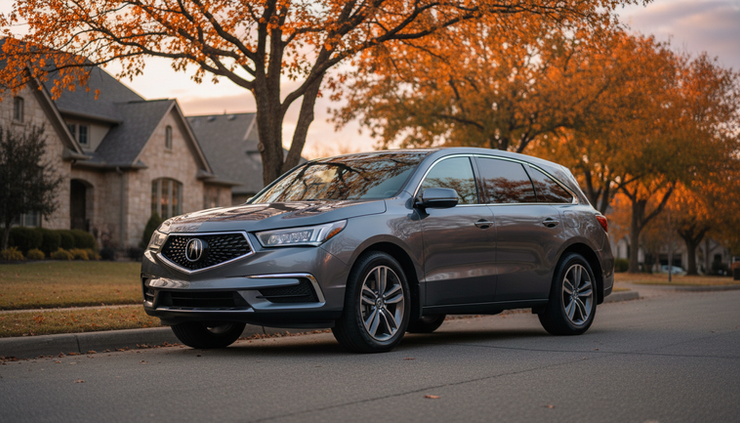
Among Acura models, SUVs often have the strongest resale position. The RDX and MDX fit what many used buyers want: comfort, utility, standard features, and a reputation tied to Honda reliability. Acura sedans can still be good used buys, but sedans as a whole face lower demand than SUVs in many parts of the U.S.
The Integra is an interesting case because it connects to Honda’s performance and enthusiast heritage. Manual-transmission versions and well-kept examples may attract dedicated buyers. Still, condition and maintenance matter more than the badge alone.
The model matters more than the badge
Brand reputation helps, but resale value gets decided one vehicle at a time. A clean Honda with poor maintenance can lose its advantage. A carefully maintained Acura with low mileage can be worth much more than the average example.
The strongest used values usually come from vehicles that match what buyers already want. For Honda and Acura, that often means practical SUVs, efficient compact cars, and family-friendly models.
Here is a simple way to think about how the two brands compare.
Category | Honda | Acura |
Brand position | Mainstream | Premium |
Typical resale strength | Very strong | Good to strong for luxury |
Best value holders | Civic, Accord, CR-V, Pilot | RDX, MDX, select Integra models |
Main resale advantage | Low ownership costs and broad demand | Premium feel with Honda engineering roots |
Main resale challenge | High-mileage wear and prior neglect | Luxury depreciation and tech aging |
Honda wins when the priority is maximum value retention and lowest ownership cost. Acura wins when the goal is a more premium driving experience while still staying close to Honda’s reliability culture.
A used Acura can also make strong financial sense because the first owner often absorbs the steepest depreciation. That means a three-year-old or four-year-old Acura may offer a lot of comfort and performance for the money. For the original buyer, though, Honda often keeps a higher share of its purchase price over time.
Mileage creates another major divide. A Honda Civic with 80,000 miles can still attract plenty of buyers if it has a clean history. An Acura TLX with the same mileage may also be appealing, but buyers may inspect it more carefully because luxury repairs can cost more.
That is why condition is so important. The used market rewards vehicles that look and feel cared for.
Look for:
Consistent oil changes
Matching tires with good tread
Clean interior surfaces
Smooth shifting
No warning lights
No signs of accident damage
A service history that matches the mileage
A badge can bring shoppers to the listing. The vehicle’s condition closes the deal.

What helps Honda and Acura keep more value
Value retention is partly about brand reputation, but owners have more control than they may think. A Honda or Acura that receives basic care can preserve more value than a similar model that gets ignored.
The biggest factors are simple.
Maintenance matters most.
Follow the maintenance schedule, keep receipts, and fix small issues before they become large ones. Buyers feel better paying a fair price when they can see proof of care.
Mileage affects value, but it is not everything.
Lower mileage usually helps, but high mileage with excellent maintenance can still be attractive. This is especially true for Honda, where buyers often expect long service life.
Exterior and interior condition shape first impressions.
Dents, stained seats, worn steering wheels, and damaged wheels can lower perceived value quickly. A clean vehicle photographs better and gives buyers more confidence.
Color and trim can influence demand.
Neutral colors like white, gray, silver, and black often appeal to a wider audience. Higher trims may help, but they do not always return their original cost. On some Acura models, the right trim can make the vehicle more desirable, especially if it includes popular comfort or performance features.
Accident history can reduce value.
Even after good repairs, a reported accident can make buyers cautious. Clean history reports help both Honda and Acura models sell more easily.
Fuel economy and practicality still matter.
Honda has a clear edge here because many of its vehicles are bought for daily use. A fuel-efficient commuter car or compact SUV can stay appealing even as gas prices move up and down.
For shoppers asking how well Honda and Acura hold their value over time, the pattern is clear: Honda has broader value strength, while Acura performs best when the model fits current demand and has been maintained well.
Buying or selling a Honda or Acura requires the right timing
Timing is not everything, but it can affect the deal.
For buyers, the sweet spot is often a vehicle that is old enough to have already taken its early depreciation but new enough to have modern safety features and a strong remaining service life. With Honda, that could mean a well-maintained Civic, Accord, or CR-V that is a few years old. With Acura, that could mean an RDX or MDX after the first owner has absorbed the biggest drop.
For sellers, preparation helps value.
Before listing a Honda or Acura, take care of the basics:
Wash and detail the vehicle
Gather maintenance records
Replace worn wiper blades
Check tire condition
Fix minor lighting issues
Remove personal items
Take clear photos in daylight
Small details can make the vehicle look better cared for. That can lead to more interest and stronger offers.
Private-party sales often bring more money than trade-ins, but they require more effort. Trade-ins are easier, especially if the vehicle needs reconditioning or the owner wants a faster transaction. The right choice depends on time, comfort level, and how much work the seller wants to do.
For Acura owners, it can help to explain the maintenance history clearly. Premium buyers want confidence. If the vehicle has had regular service and no major issues, say so in plain language.
For Honda owners, the biggest advantage is demand. A clean, fairly priced Honda often attracts attention quickly because buyers already understand the brand’s reputation.

The takeaway on Honda and Acura resale value
Honda and Acura both hold value well, but they do it for different reasons.
Honda is the safer bet for maximum resale strength. Its best models are practical, affordable to maintain, fuel-efficient, and trusted by a wide range of buyers. That combination keeps demand strong year after year.
Acura holds value respectably for a luxury brand, especially when compared with premium vehicles that can be more expensive to maintain. The RDX and MDX are usually the strongest Acura choices because SUVs remain popular and useful. Acura sedans and performance-oriented models can still be smart buys, but resale strength depends more heavily on condition, mileage, and buyer demand.
The best value choice is the one that fits the plan. Choose Honda for lower ownership costs and stronger mainstream resale. Choose Acura for more comfort, more features, and a premium feel with a reputation that still connects back to Honda engineering.
Either way, the same rule applies: buy the right model, maintain it well, keep records, and avoid neglect. That is how a Honda or Acura keeps more of its value over time.


Comments