
Can Kia and Hyundai Overtake Japanese Automakers and Become Number One
Kia and Hyundai are no longer the discount alternatives parked at the edge of the lot. They are building bold EVs, sharp-looking SUVs, upscale Genesis sedans, and family cars that feel far more expensive than they are. The question is no longer whether Korean automakers can compete. They already do.
The harder question is whether they can pass Toyota, Honda, Lexus, Mazda, Subaru, and Nissan in the areas that matter most: reliability, trust, resale value, engineering depth, and long-term ownership confidence.
The answer is yes, but not all at once. Kia and Hyundai can overtake some Japanese automakers in specific segments. They can become stronger reliability players. They may even challenge for the top spot globally. But becoming “number one” depends on what number one means.
If it means design momentum, EV ambition, warranty confidence, and product freshness, they are already near the front. If it means Toyota-level trust built over decades, they still have work to do.

Why Kia and Hyundai are serious threats now
For years, Kia and Hyundai won buyers with low prices, long warranties, and lots of features. That strategy worked, but it also created a ceiling. Many drivers saw them as good deals, not necessarily great cars.
That has changed.
The Hyundai Motor Group, which includes Hyundai, Kia, and Genesis, now competes across nearly every major category:
Small sedans and hatchbacks
Compact and midsize SUVs
Three-row family SUVs
Hybrids and plug-in hybrids
Battery-electric vehicles
Luxury cars under the Genesis brand
Performance models such as Hyundai’s N line and N cars
The group has also become far better at design. The Kia Telluride helped change public perception in the US. The Hyundai Palisade did the same for families who wanted a polished three-row SUV without luxury-brand pricing. The Ioniq 5, Ioniq 6, EV6, and Genesis electric models showed that Korean automakers could build EVs with real personality.
This matters because car buyers do not only buy reliability charts. They buy what feels modern, safe, useful, and desirable. Toyota and Honda still have enormous trust, but they have sometimes moved cautiously. Kia and Hyundai have been quicker to take design risks and fill gaps in the market.
That speed gives them an opening.
Japanese automakers still have the advantage in long-term reputation, especially Toyota and Lexus. But Kia and Hyundai have narrowed the gap in perceived quality faster than many people expected. A shopper who would never have considered a Hyundai 20 years ago may now have a Hyundai or Kia on the same list as a Toyota, Honda, or Subaru.
That change is not cosmetic. It is the result of better platforms, better interiors, better safety technology, and a desire to compete above their old price class.
Reliability is the real test
Reliability is where the conversation gets serious.
Toyota and Lexus built their reputations on vehicles that could run for years with basic care. Honda earned similar loyalty through efficient engines, smart packaging, and durable drivetrains. Mazda has also gained respect for simple, well-built vehicles with a premium feel. Subaru buyers often value all-weather confidence and long vehicle life.
Kia and Hyundai have improved a lot, but their history is more mixed.
They have produced many solid vehicles. They have also had high-profile problems, including engine-related recalls in past model lines and the widely discussed theft vulnerability in some older vehicles that lacked engine immobilizers. Those issues matter because reliability is not only about whether a car starts tomorrow. It is about whether buyers feel protected after five, seven, or ten years.
That is the mountain Kia and Hyundai must climb.
A strong warranty helps. Hyundai and Kia have long used generous powertrain warranties in the US to reduce buyer hesitation. That signals confidence, and it gives owners a safety net. But a warranty is not the same as a reputation for trouble-free ownership.
To truly match the best Japanese automakers, Kia and Hyundai need more than good initial quality. They need consistent long-term durability across many model years. They need fewer repeat problem areas. They need owners to say, without hesitation, “I would buy another one.”
That kind of trust takes time.

There is also a key distinction between initial quality and long-term reliability.
Initial quality often measures problems during the first months of ownership. That can include infotainment complaints, trim issues, wind noise, warning lights, or small defects. Long-term reliability is different. It asks harder questions.
Will the transmission hold up? Will the engine age well? Will the hybrid system remain dependable? Will the electronics behave after years of heat, cold, vibration, and software updates?
Toyota has mastered this slower, less glamorous kind of quality. The company often avoids rushing brand-new technology into every model at once. It tests, refines, and spreads proven systems across many vehicles. That cautious approach can make some Toyotas feel conservative, but it also protects the brand.
Kia and Hyundai can close the gap, but they must keep reducing the number of serious mechanical issues. They also need to make repairs simpler, parts availability stronger, and service experiences more consistent.
Buyers forgive quirks. They do not easily forgive major engine failures, unclear recall communication, or cars that age poorly.
Where Kia and Hyundai can pass Japanese brands
Kia and Hyundai do not need to beat every Japanese automaker at everything to overtake them in the marketplace. They only need to win enough categories that buyers care about.
They already have clear strengths.
Area | Kia and Hyundai advantage | Japanese automaker advantage |
Design | Bolder styling and more varied interiors | More conservative, often safer designs |
Warranty | Long coverage helps reduce risk | Strong reputation may reduce need for long coverage |
EVs | Strong dedicated EV platforms and fast product development | Toyota and some others moved more slowly into full EVs |
Value | Many features at lower prices | Higher resale value, especially Toyota and Honda |
Reliability reputation | Improving, but still uneven | Toyota, Lexus, and Honda remain stronger |
Buyer trust | Growing quickly | Built over generations |
The biggest opportunity is EVs.
Toyota dominates hybrids, and no one should ignore that. The Prius, RAV4 Hybrid, Camry Hybrid, and other Toyota hybrid models have made hybrid ownership feel normal. Honda also offers strong hybrid systems. For buyers who want efficiency without charging, Japanese automakers remain very strong.
Full EVs are different.
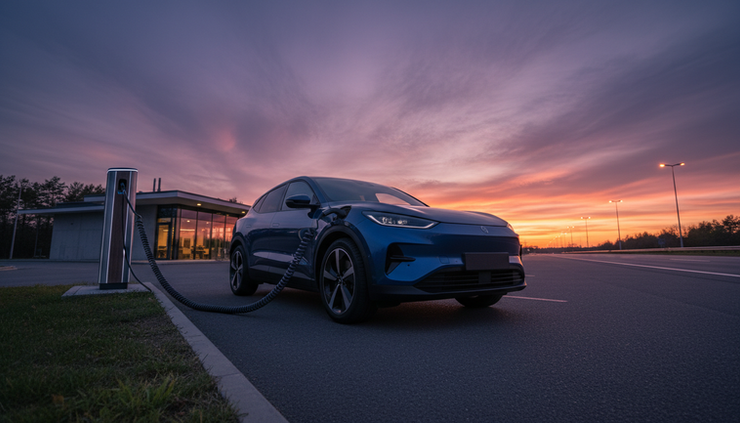
Hyundai and Kia moved early with dedicated EV designs that did not feel like converted gas cars. The Ioniq 5 and EV6 helped establish them as serious EV brands. Their interiors, charging capability, and packaging gave them credibility beyond value pricing.
If the market shifts more strongly toward EVs, Kia and Hyundai may gain ground faster than legacy reputation would suggest. EV buyers often care less about old engine durability records and more about battery range, charging speed, software, cabin design, and availability.
That gives Korean brands a chance to reset the scoreboard.
They also have strength in mainstream SUVs. The Telluride and Palisade showed that Kia and Hyundai can build vehicles that feel premium without luxury pricing. In a market where family SUVs carry huge importance, that matters.
Genesis is another piece of the puzzle. Japanese automakers have Lexus, Acura, and Infiniti. Lexus remains the strongest of those by reputation, especially for reliability and comfort. Genesis has not matched Lexus for long-term trust yet, but it has brought fresh design and strong value to the luxury market.
If Genesis continues improving dealer experience, resale value, and reliability, it could become a more serious threat to Lexus over time.

What could hold them back
Kia and Hyundai have momentum, but they are not guaranteed to pass the Japanese leaders. Several risks could slow them down.
They must avoid repeated quality problems
One major recall can hurt. A pattern hurts more.
When buyers hear repeated stories about engines, transmissions, electronics, or theft-related issues, they become cautious. Even if newer models are much better, reputation lags behind reality.
Toyota still benefits from decades of good owner stories. Kia and Hyundai are still building that memory bank. Each new generation has to prove itself.
Dealer experience matters more than people think
A great car can be dragged down by a poor service visit.
Toyota and Honda dealers vary, but the brands have mature service networks and huge parts ecosystems. Kia and Hyundai have grown fast, and the dealer experience has not always matched the quality of the newer vehicles. Genesis has faced an even bigger challenge because luxury buyers expect a smoother sales and service process.
If Korean automakers want to beat Japanese brands, they need service departments that feel as polished as the cars. That means clear communication, timely repairs, good parts access, and fewer owner hassles.
Resale value remains a trust score
Resale value is not only a financial number. It reflects what the used-car market believes.
Toyota and Honda often hold value well because used buyers trust them. Lexus does the same in the luxury space. Kia and Hyundai resale values have improved, but they still need more time and consistency to match the strongest Japanese brands in many categories.
Better resale values would create a cycle. Higher used values make new buyers more confident. More confident buyers raise demand. More demand supports stronger values.
Toyota is not standing still
The idea that Kia and Hyundai will pass Japanese automakers assumes the Japanese brands will remain slow. That is not safe.
Toyota still has massive scale, manufacturing skill, hybrid leadership, and global loyalty. Honda has engineering credibility and a strong presence in cars, SUVs, motorcycles, and power equipment. Mazda has moved upscale with careful design and enjoyable driving manners. Subaru owns a loyal niche around standard all-wheel drive and safety identity.
Nissan has struggled more than Toyota and Honda in recent years, which gives Kia and Hyundai a clearer opening there. But beating Nissan is different from beating Toyota.
The top Japanese brands know how to adapt. They may move cautiously, but once they commit, they bring enormous resources.
Can they ever become number one
Yes, but the definition matters.
If number one means global sales volume, Hyundai Motor Group is already one of the largest automaking groups in the world, with Toyota still at or near the top depending on the year and measurement. Passing Toyota would require not just great cars, but global production strength, supply chain discipline, pricing power, and success in North America, Europe, India, Korea, and other major markets.
That is possible, but difficult.
If number one means most trusted for reliability, Kia and Hyundai are not there yet. Toyota and Lexus still set the standard. Honda remains a major benchmark. Trust in long-term ownership is slow to build and fast to damage.
If number one means product momentum, design confidence, and ability to surprise the market, Kia and Hyundai may already be ahead of several Japanese brands. Their recent vehicles have changed expectations. They are not copying the leaders as much as they are forcing the leaders to respond.
The most realistic future looks like this:
Kia and Hyundai pass Nissan in more markets and segments.
They challenge Honda more directly in SUVs, hybrids, and EVs.
They compete with Mazda on design and cabin feel.
Genesis keeps chasing Lexus, but needs years of consistency.
Toyota remains the hardest target because of reliability, hybrids, scale, and buyer trust.
The path to number one is not a single leap. It is a long series of proof points.
The verdict is promising but not settled
Kia and Hyundai can absolutely overtake some Japanese automakers. In certain categories, they already have. Their best SUVs, EVs, and value-focused models are no longer backup choices. They are first-choice vehicles for many shoppers.
Will they make their vehicles more reliable? They likely will, and they already have improved compared with their older reputation. But the next stage is harder. They must prove long-term durability across engines, hybrids, EV batteries, software, and service support. They need fewer big misses and more boringly dependable model years.
Will they ever be number one? They can be number one in design momentum, EV competitiveness, feature value, and buyer excitement. They can become a top global force for decades. Passing Toyota as the default reliability choice is the toughest challenge in the car business.
The simple takeaway is this: Kia and Hyundai have earned a place in the same conversation as Japanese automakers, but becoming the undisputed leader will require time, restraint, and consistency. Flashy design got them noticed. Reliability will decide how far they go.


Comments