
Why Modern Engines Fail So Fast The Hidden Cost of Turbocharged Efficiency
A modern engine can make impressive power from a tiny block, pass strict emissions tests, and sip fuel on the highway. That sounds like progress, and in many ways it is. The problem is what often gets traded away to make that happen: simplicity, heat tolerance, repairability, and long-term durability.
For decades, a basic naturally aspirated engine could run for hundreds of thousands of miles with regular oil changes, decent cooling, and normal care. It had fewer high-stress parts. It made less power per liter. It had room to run cooler and looser.
Many newer engines live a harder life from the moment they start. Small displacement, high boost, direct injection, variable valve timing, stop-start systems, thin oil, tight packaging, and complex emissions hardware all work together to improve fuel economy and emissions numbers. They also create more heat, more pressure, more failure points, and less margin for neglect.
That is the hidden cost of turbocharged efficiency. The engine may be cleaner and more efficient on paper, but it may not age with the same forgiveness.
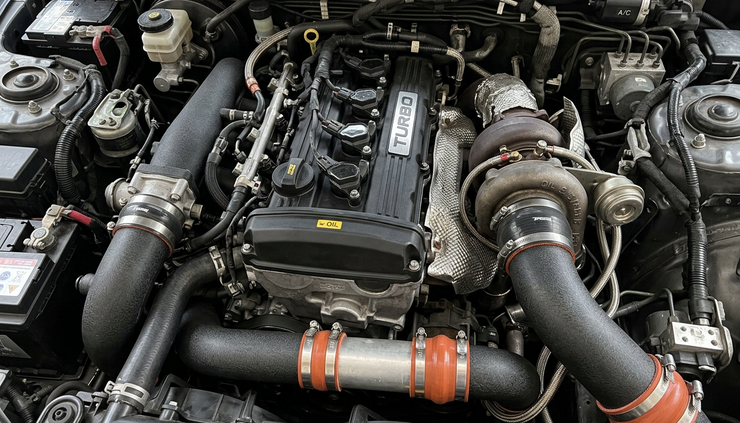
Downsized engines work harder than older engines
The basic idea behind downsizing is simple. Use a smaller engine most of the time, then add turbo boost when the driver needs power. A 1.5-liter or 2.0-liter turbo engine can replace a larger naturally aspirated engine and still deliver strong acceleration.
That works because a turbocharger forces more air into the cylinders. More air means the engine can burn more fuel and make more power. The catch is that this raises cylinder pressure and heat.
Older engines often made moderate power with larger displacement. They did not need to squeeze as much work from every combustion event. Many modern engines do the opposite. They are asked to act small during fuel economy testing and act big during real-world driving.
That creates a harsh duty cycle:
High boost at low rpm
More heat around the turbo and exhaust side
Greater stress on pistons, rings, bearings, head gaskets, and connecting rods
More dependence on perfect oil quality and cooling system health
A small turbo engine may feel effortless, but it is not living an effortless life. Passing a slow truck, climbing a grade, merging onto the freeway, or towing near the rated limit can push it hard. The driver may not notice because the power delivery feels smooth. Inside the engine, pressure and temperature can spike quickly.
This does not mean every turbo engine is fragile. Some are excellent. The issue is that modern designs leave less room for abuse. A missed oil change, cheap oil, ignored coolant leak, or habit of shutting the engine off right after hard driving can have bigger consequences than it did on older, simpler engines.
Heat is the enemy hiding under the hood
Heat has always been one of the main enemies of engines. Turbocharging intensifies the problem.
A turbocharger is driven by exhaust gas. That means it sits in one of the hottest parts of the engine bay. Many modern vehicles place the turbo, catalytic converter, exhaust manifold, coolant lines, oil lines, sensors, plastic intake parts, and wiring into a very tight space. This helps packaging and emissions warm-up, but it traps heat.
Heat affects nearly everything:
Oil breaks down faster
Rubber hoses harden and crack
Plastic fittings become brittle
Gaskets cook and shrink
Coolant systems face higher load
Electrical connectors and sensors age faster
Modern engine bays are also tightly sealed for airflow, crash structure, noise control, and aerodynamic reasons. There is often less physical room around the engine than there used to be. That makes repair harder and gives heat fewer places to escape.

Oil plays a major role here. Turbochargers depend on clean oil for lubrication and cooling. Many modern engines use thinner oils to reduce friction and improve fuel economy. These oils can work very well when they meet the correct specification and are changed on time. They are less forgiving when owners stretch service intervals, use the wrong oil, or make many short trips that never fully heat the oil.
Short trips are especially hard. Fuel and moisture can build up in the oil. The engine may not reach steady operating temperature long enough to burn off contamination. Add a turbocharger to that routine, and the oil has to protect precision bearings under high heat while dealing with contamination.
That is why maintenance culture matters more now. The old attitude of “just change the oil whenever” does not fit many new engines.
Direct injection solved one problem and created another
Gasoline direct injection helped automakers improve power, efficiency, and emissions. Instead of spraying fuel into the intake port before the valve, the system injects fuel directly into the combustion chamber at high pressure.
This allows more precise fuel control. It can help prevent knock, support higher compression, and work well with turbocharging. But it brings trade-offs.
In older port-injected engines, gasoline washed over the back of the intake valves. That helped keep them cleaner. In many direct-injected engines, fuel no longer touches those valves. Oil vapor from the PCV system can stick to the hot valve surfaces and form carbon buildup over time.
The result can be:
Rough idle
Misfires
Loss of power
Poor fuel economy
Expensive cleaning service
Some engines use both port injection and direct injection to reduce this issue. That adds complexity, but it can help. Others rely on improved PCV design, oil separators, software, and maintenance practices.
Direct injection also uses high-pressure fuel pumps and injectors that cost more than older systems. When they work, they are precise and effective. When they fail, repairs can be expensive.
Again, the theme is not that new technology is bad. The theme is that every efficiency gain often comes with added hardware, tighter tolerances, and new ways to fail.

Emissions hardware makes engines cleaner but more complex
Modern engines are cleaner than older engines. That matters. Cities benefit from lower tailpipe pollution, and automakers must meet strict standards. The trouble is that the systems needed to achieve those gains can put more stress on the engine or add expensive failure points.
Common systems include:
Exhaust gas recirculation
Positive crankcase ventilation
Catalytic converters close to the engine
Oxygen and temperature sensors
Evaporative emissions controls
Gasoline particulate filters in some markets
Diesel particulate filters and selective catalytic reduction on many diesels
These systems are not optional add-ons. They are woven into how the engine runs. A bad sensor, clogged passage, failing valve, or software issue can cause drivability problems, warning lights, limp mode, or engine damage if ignored.
Exhaust gas recirculation, for example, can reduce combustion temperatures and emissions. But it can also introduce soot and deposits into intake systems, especially in diesel engines. Particulate filters can work well on vehicles that regularly drive long enough to regenerate properly. Vehicles used mostly for short trips may struggle.
Close-coupled catalytic converters warm up quickly, which helps emissions after a cold start. They also keep more heat near the engine. That can be rough on nearby parts.
There is a deeper issue too: modern engines are often designed around test cycles, fleet averages, and regulatory targets. Engineers do impressive work within those limits, but the final product has to satisfy many masters at once. It must be powerful, clean, quiet, cheap enough to build, light enough to help fuel economy, and compact enough to fit shared platforms.
Longevity still matters, but it competes with other priorities.
Long service intervals can be risky in real life
Many vehicles advertise long oil change intervals. Under perfect conditions, with the right oil, steady driving, and a healthy engine, those intervals may be safe. Real life is often not perfect.
Short trips, cold starts, heavy traffic, towing, dusty roads, high heat, and spirited driving all count as severe service. Many owners drive in severe conditions without realizing it. A turbocharged engine with direct injection and tight tolerances may not respond well to extended oil changes under those conditions.
Oil does more than lubricate. It cools, cleans, seals, and protects. In a turbo engine, it also flows through areas exposed to extreme heat. Once oil degrades, it can leave deposits in small passages. That can hurt turbo bearings, variable valve timing components, timing chains, and piston rings.
Timing chains deserve special attention. Many drivers think chains last forever because older ones often did. In some modern engines, long oil intervals and small oil passages can contribute to chain stretch, tensioner wear, or guide wear. Repairs can be labor-intensive because engines are tightly packaged.
The same applies to “lifetime” fluids. The word sounds comforting, but lifetime often means the expected service life under ideal conditions, not forever. Transmission fluid, coolant, differential fluid, and even fuel system cleanliness all affect how long a vehicle stays reliable.
The owner’s manual is the starting point, not the full story. Severe service schedules often make more sense for modern turbocharged vehicles.
Why older engines felt more durable
Older engines were not perfect. They leaked oil, burned more fuel, polluted more, and often made less power. Some had terrible designs. Nostalgia can smooth over plenty of flaws.
Still, many older engines had traits that helped durability:
Lower specific output
Less boost or no boost
More space under the hood
Simpler fuel systems
Fewer sensors and control modules
Larger oil capacity in some applications
Less reliance on plastic parts in hot areas
They were also easier to maintain. A small leak could be seen. A hose could be reached. A thermostat or alternator might be replaced without removing half the front of the vehicle. Problems were often mechanical and visible.
Modern engines hide problems behind covers, buried components, and software logic. Diagnosis may require scan tools, service data, and brand-specific knowledge. Even simple parts can take hours to access.

This is why some owners feel betrayed. They buy a modern vehicle expecting progress in every direction. They get better power, lower emissions, and better fuel economy. Then a turbo, injector, timing chain, coolant fitting, or emissions component fails earlier than expected.
The failure may not be random. It may be the result of a design that runs closer to the edge.
What drivers can do to make modern engines last
Modern engines are not doomed. Many run a long time when maintained correctly. The key is to treat them as high-performance machines, even when they are in normal family cars.
A few habits help:
Change oil sooner than the maximum interval
Use the exact oil specification the manufacturer requires. For many turbo engines, shorter intervals are cheap insurance, especially with short trips or heavy traffic.
Let the engine warm before hard acceleration
You do not need to idle for a long time. Just drive gently until the oil has time to warm. Coolant warms faster than oil, so the temperature gauge does not tell the whole story.
Avoid shutting down immediately after hard driving
After climbing a grade, towing, or driving hard, give the engine a short period of gentle driving before shutdown. This helps manage turbo heat.
Fix cooling system issues early
A small coolant leak, weak cap, failing thermostat, or clogged radiator can become a major problem in a high-heat engine.
Use quality fuel when required
If the engine calls for premium fuel, use it. Running lower octane can make the engine pull timing, run hotter, or work harder to prevent knock.
Pay attention to misfires and warning lights
Modern engines can damage catalytic converters and other parts if misfires continue. Small problems can become expensive fast.
Do not ignore software updates and recalls
Engine control software affects boost, fuel, timing, emissions controls, and drivability. Updates can sometimes address known issues.
These steps cannot erase design flaws. They can give a modern engine the best chance to survive.
The real cost of efficiency is paid over time
The auto industry did not make engines more complex for no reason. Regulations, consumer demand, fuel prices, performance expectations, and global competition all pushed engines in this direction. A small turbo engine can be impressive. It can deliver power that older engines of the same size could never match.
But the trade-off is real. Complexity raises the cost of failure. Heat shortens the life of nearby parts. Tight tolerances punish poor maintenance. Emissions systems add sensitive hardware. Long service intervals can look good on paper while giving owners less room for real-world use.
The best way to think about modern engines is simple: they are efficient because they are working harder and being controlled more precisely. That precision needs clean oil, proper cooling, good fuel, and timely repairs.
If long-term ownership matters, look beyond horsepower, fuel economy ratings, and monthly payment. Study the engine design. Check whether it uses a turbo, direct injection, a wet timing belt, complex emissions hardware, or unusually long service intervals. Look at service access. Ask what common repairs cost once the warranty ends.
Modern engines can last. But they rarely tolerate neglect the way older engines did. The hidden cost of efficiency is not always paid at the fuel pump. Sometimes it arrives years later, in the service bay, when a small turbocharged engine finally shows how hard it has been working.


Comments