
Why Does the Ford 2.7 EcoBoost Have So Many Problems, Recalls, and Cam Phaser Issues
The Ford 2.7 EcoBoost is a strange engine to talk about because its reputation is split. Some owners run them hard for high mileage with few complaints. Others deal with rattles, oil leaks, valve failures, timing concerns, or confusing recall notices and wonder why Ford built such a complicated engine in the first place.
The short answer is this: the 2.7 EcoBoost makes a lot of power from a small package, and that means it depends heavily on precise oil control, turbocharger heat management, variable cam timing, direct injection, and tight internal tolerances. When everything works, it feels strong and efficient. When one part of that system falls out of spec, the symptoms can sound serious fast.
It also gets blamed for problems that are not always unique to the 2.7. Some recalls apply to the whole vehicle. Some cam phaser complaints are more common on the 3.5 EcoBoost. Some rattles are normal for a direct-injected turbo engine, while others are early warnings.
So the real answer is more nuanced than “the engine is bad.”

The 2.7 EcoBoost is powerful because it is complex
The 2.7 EcoBoost is not a simple old-school V6. It uses turbochargers, variable cam timing, high-pressure fuel delivery, and modern emissions controls to make strong torque from a relatively small displacement.
That is the whole appeal. A smaller engine can feel like a larger one because the turbos force more air into the cylinders. The engine management system then adds fuel, adjusts cam timing, and controls boost to deliver power quickly.
That design also creates more possible failure points.
A naturally aspirated engine may have fewer parts under high thermal stress. The 2.7 has:
Twin turbochargers
Intercooler plumbing
High-pressure fuel components
Variable cam timing hardware
Timing chains and tensioners
PCV and crankcase ventilation parts
Many sensors controlling boost, fuel, and spark
None of that means the design is doomed. It means maintenance matters more. Oil quality, oil change intervals, cooling system health, and software updates all become more important than they were on simpler engines.
The 2.7 also has a compact layout. Heat builds quickly around the turbos and exhaust components. Heat hardens seals, stresses plastic parts, and makes oil condition more important. If an owner stretches oil changes, uses the wrong oil, ignores misfires, or keeps driving with low oil, the engine may punish that neglect sooner than an older low-output V6 would.
That is one reason people ask about Ford 2.7 EcoBoost problems even though many engines never suffer a major failure. The engine is capable, but it is not very forgiving when its support systems are ignored.
Recalls do not always mean the engine itself is unreliable
Recalls create anxiety because they sound like proof of a bad design. In reality, a recall is a safety or emissions-related correction. It may involve software, fuel system parts, electrical connectors, braking systems, seat belts, or other vehicle systems.
That matters because many owners see a recall attached to an F-150, Bronco, Edge, or other Ford model and assume the 2.7 engine is the root cause. Sometimes it is. Often it is not.
There have been engine-related concerns involving certain 2.7 EcoBoost applications, including reports of valve failures in some newer vehicles. Ford has also issued service actions and technical guidance over the years for issues like oil leaks, drivability symptoms, and software updates depending on model year and vehicle.
But recalls are usually limited by:
Model year
Assembly plant
Build date
Specific component supplier
Vehicle platform
Calibration or software version
That is why two trucks with “the same engine” can have different recall histories. A 2.7 in a 2016 F-150 is not identical in every detail to a later 2.7 in another application. Ford revised the engine over time, including updates to fuel injection design and other systems.
A recall also does not mean every affected vehicle has already failed. It means the manufacturer or regulators identified a risk serious enough to require a remedy.
The smart move is to check the VIN with Ford or the National Highway Traffic Safety Administration database. Do not rely only on forum posts. They rarely separate verified recalls from technical service bulletins, warranty extensions, customer satisfaction programs, and ordinary repairs.
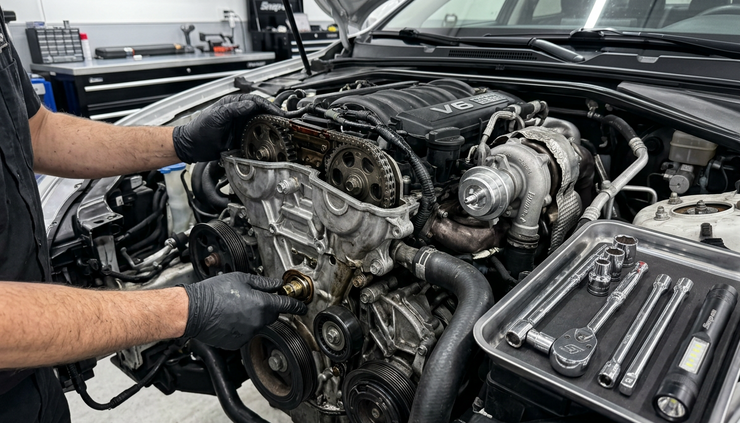
Timing chain rattle usually comes from oil control and tension
A timing chain should not sound like a loose bicycle chain every time the engine starts. Still, brief startup noise is one of the most common complaints on modern variable-cam engines, including Ford EcoBoost engines.
The timing chain system relies on oil pressure. When the engine sits, oil can drain back from tensioners and cam phaser components. On startup, the chain may rattle until oil pressure builds and the tensioners stabilize the system.
A very brief noise can be hard to diagnose. A longer, sharper, or worsening rattle deserves attention.
Common causes include:
Low or dirty oil
The timing tensioners and cam phasers need clean oil at the correct pressure. Old oil can sludge, thicken, or lose its ability to flow quickly during cold starts. Low oil makes the problem worse.
Worn timing chain tensioners
A hydraulic tensioner can bleed down after the engine sits. If it cannot hold proper tension during startup, the chain can slap against guides until pressure builds.
Stretched chain or worn guides
Chains can elongate over time. Guides can wear. When that happens, the engine may develop more than a quick startup rattle. It may also show timing correlation codes or drivability problems.
Cam phaser lock pin wear
Some cam phasers use internal locking mechanisms to hold position when the engine is off. If the phaser does not lock properly, it can clatter on startup.
Wrong oil viscosity or poor filter quality
An oil filter with a poor anti-drainback valve can allow oil to drain away from critical passages. That can make the first seconds after startup noisier.
A chain rattle that happens only for a split second after sitting overnight may not mean the engine is about to fail. A rattle that lasts several seconds, happens warm, triggers codes, or gets louder over time is different. That is when diagnosis should not wait.
One key point gets overlooked: replacing only the noisy part may not fix the root cause. If sludge, oil pressure loss, worn guides, or phaser problems caused the noise, the whole timing system needs to be evaluated.
Cam phaser problems are tied to how the engine changes valve timing
Cam phasers are part of the variable cam timing system. They allow the engine computer to advance or retard camshaft position while the engine runs. That improves low-end torque, fuel economy, emissions, and throttle response.
The tradeoff is complexity. A cam phaser is not just a gear. It uses oil pressure, control valves, internal passages, seals, and locking mechanisms. If any part of that system gets dirty, worn, or starved for oil, noise and timing problems can follow.
Cam phaser concerns became especially well known on Ford’s larger EcoBoost engines, but the 2.7 can still experience VCT-related symptoms. Owners often describe:
Rattle at cold startup
Rough idle
Check engine light
Loss of power
Timing-related fault codes
Poor fuel economy
A diesel-like clatter for a few seconds
The reason cam phasers get blamed so often is that they sit right at the center of several symptoms. A startup rattle may be a phaser. It may also be a tensioner, chain, guide, oil pressure concern, or control solenoid issue. Guessing can get expensive.
Cam phaser problems often start with oil behavior. The phaser needs clean oil at the right pressure. If oil changes are neglected, tiny passages can clog. If the oil drains back after shutdown, the phaser may not lock cleanly. If the control solenoid sticks, the phaser may move when it should not.
That is why a good diagnostic process matters.
A technician should check:
Oil level and condition
Correct oil specification
Stored and pending fault codes
Cam/crank correlation data
VCT solenoid operation
Startup noise duration
Whether the rattle happens hot, cold, or both
Service history and prior repairs
A cam phaser repair can be labor intensive because the timing system sits behind front engine covers and requires careful alignment. That is why shops often recommend replacing related components at the same time if the front of the engine is already apart.

Some common 2.7 complaints come from specific design choices
The 2.7 EcoBoost’s problem list is not limited to chains and cam phasers. Several common complaints come from the way modern turbo engines are built.
Oil leaks can happen around pans, covers, and turbo plumbing
Some owners report oil seepage or leaks around the oil pan, valve covers, timing cover, or turbo oil lines. Not every leak is catastrophic, but oil leaks should be taken seriously on a turbocharged engine.
Turbochargers rely on steady oil flow. Running low on oil can damage bearings, tensioners, phasers, and chains.
Plastic or composite oil pans, sealants, and tight packaging can make leak repairs more annoying than expected. Sometimes the fix requires careful surface prep and the correct sealing procedure, not just more sealant.
Carbon buildup can affect some versions
Direct injection sprays fuel directly into the combustion chamber. That helps power and efficiency, but it means fuel does not wash over the back of the intake valves the way port injection does.
Over time, some direct-injected engines can develop intake valve deposits. Symptoms can include rough idle, misfires, or reduced performance.
Later versions of the 2.7 used a dual fuel setup in some applications, combining port and direct injection. That helped reduce the intake valve deposit issue, but it did not remove every possible drivability complaint.
Turbo heat stresses nearby parts
Turbochargers get extremely hot. Heat shields, coolant lines, oil lines, vacuum hoses, plastic fittings, and wiring all live near that heat.
A small leak or failing hose can create boost issues, coolant smells, oil smoke, or odd drivability problems. These are not always internal engine failures, but they can feel like major engine trouble from the driver’s seat.
Spark plugs and ignition parts work hard
Boosted engines are sensitive to spark quality. Worn plugs can cause misfires under load before they feel bad during normal driving. Ignition coils also have a harder job when cylinder pressure is high.
A misfire that only appears during acceleration may not mean the engine is failing. It may be ignition-related. Ignoring it can damage catalytic converters or create more serious problems.
Why the engine gets such a bad reputation online
Online complaints can make any engine look worse than it is. People rarely post daily updates saying their truck started normally again. They post when something rattles, leaks, smokes, or leaves them stranded.
That does not mean the complaints are fake. It means the sample is biased.
The 2.7 EcoBoost also appears in popular vehicles. The more engines Ford sells, the more failures people will discuss. Even a modest failure rate can produce a large number of posts when the engine is installed in high-volume models.
There is another issue: owners sometimes mix up the 2.7 and 3.5 EcoBoost when discussing phasers and chains. The larger 3.5 has a more famous history of cam phaser complaints. That reputation bleeds into every EcoBoost conversation.
Still, Ford deserves some of the criticism. Modern engines are often sold as low-maintenance, high-output solutions, but the real ownership experience can be different. A small turbo V6 that tows, idles in heat, takes short trips, and goes too long between oil changes lives a hard life.
The engine is not fragile in the sense that it cannot work. It is sensitive in the sense that small maintenance mistakes can become expensive.

How to reduce the risk of chain and phaser trouble
No maintenance routine can prevent every defect, but good habits reduce the odds of expensive timing problems.
The most useful steps are simple:
Change oil on time, preferably sooner if the vehicle tows, idles often, or takes many short trips.
Use oil that meets Ford’s required specification.
Use a quality oil filter with a good anti-drainback valve.
Do not ignore startup rattle that gets longer or louder.
Fix oil leaks before the level drops.
Address misfires quickly.
Let the engine warm normally before heavy throttle.
Keep cooling system problems from lingering.
Check for open recalls by VIN, not by rumor.
Listen to the pattern of the noise. A half-second tick after sitting overnight is different from a three-second clatter every morning. A warm rattle is different from a cold-only noise. A rattle with a check engine light is different from one with no codes.
If the vehicle is still under warranty, document the concern early. Record the sound on a cold start. Note the outside temperature, how long the vehicle sat, and whether the check engine light came on. Intermittent timing noises can be hard for a shop to duplicate, and good notes help.
If buying a used 2.7 EcoBoost, ask for service records. A truck with regular oil changes is a much better bet than one with unknown history and a fresh engine detail hiding leaks.
The real answer is not that the 2.7 EcoBoost is simply bad
The Ford 2.7 EcoBoost has problems because it is a high-output, turbocharged, computer-controlled engine that depends on precise oil control and many moving systems working together. Recalls happen for a mix of reasons, and not all of them point to the engine itself. The chain rattle often comes from tensioner, oil pressure, guide, or phaser behavior. Cam phaser issues happen because variable cam timing is powerful but mechanically demanding.
The fair view is this: the 2.7 EcoBoost can be a strong engine, but it is not a neglect-proof engine. Clean oil, correct parts, careful diagnosis, and attention to early noises matter.
If the engine rattles briefly once in a while, do not panic. If the rattle grows, lasts longer, appears warm, or comes with codes, treat it as an early warning. The cheapest time to solve a timing or cam phaser problem is before the chain jumps, the guides break down, or the repair becomes an engine replacement.


Comments