
Why Are Fewer People Choosing Mechanic Careers in Auto and Aircraft Repair
Ask a repair shop owner what keeps them up at night, and many will not start with parts shortages or customer complaints. They will talk about people. More precisely, they will talk about how hard it is to find skilled technicians who want to stay in the trade.
The same concern shows up around aircraft maintenance. Hangars need licensed, careful, technically sharp people. Cars and aircraft are getting more advanced, not simpler. Yet fewer young workers seem eager to become mechanics, at least compared with the demand.
This is not because the work stopped mattering. A good auto mechanic keeps families safe on the road. A good aircraft mechanic helps keep passengers, pilots, and crews alive. The work has value. The problem is that the job has become harder to sell.

The old picture of mechanic work does not match the modern job
A lot of people still imagine mechanic work as turning wrenches, changing oil, replacing brakes, and listening for engine noises. That work still exists, but it is no longer the whole job.
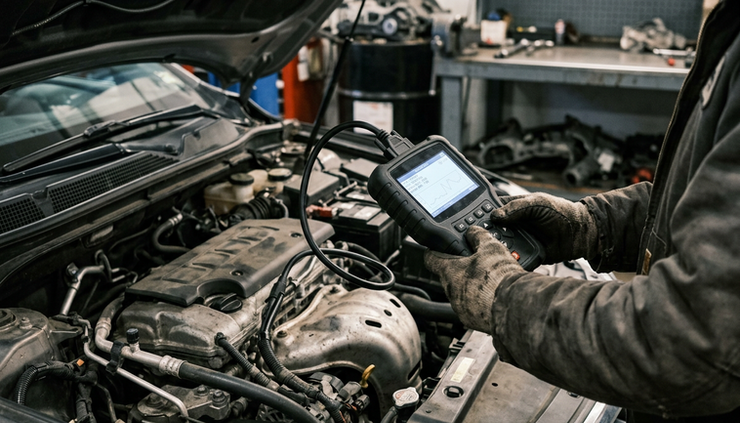
Modern cars are rolling computer networks. A technician may need to understand:
Electronic control modules
Sensor data
High-voltage hybrid and EV systems
Advanced driver assistance systems
Software updates and calibration steps
Scan tool readings and wiring diagrams
Aircraft maintenance has its own version of this shift. Airframes, engines, avionics, composite materials, and digital systems all demand careful training. A mechanic may inspect physical parts one hour and troubleshoot electrical systems the next.
That makes the work more interesting for some people. For others, it makes the path feel intimidating.
The public image has not caught up. Many parents, teachers, and students still see mechanic careers as a backup plan instead of a technical profession. That hurts recruiting. When a job requires electronics knowledge, diagnostic thinking, expensive tools, and strict safety standards, it deserves to be treated as skilled technical work.
When it is not, people look elsewhere.
Pay, tool costs, and training can make the math feel off
One major reason fewer people choose mechanic careers is simple. The entry path can feel expensive and uncertain.
Many new auto technicians are expected to buy their own tools over time. A basic starter set can grow into a large, costly toolbox. Specialty tools, scan tools, meters, and storage can add even more cost. Apprentices often start at modest wages while they learn, which makes the early years feel tight.
Aircraft maintenance has a different path, but it also asks a lot from newcomers. Many aircraft mechanics pursue Airframe and Powerplant certification, often called an A&P. That takes formal training, documented experience, testing, and a serious commitment. The work carries high responsibility from day one.
The issue is not only pay. It is the gap between the skill required and the reward people expect.
A young person comparing careers may look at mechanic work and see:
Physical labor
Expensive tools
Years of skill building
Pressure to be fast and accurate
Pay that may start lower than other technical jobs
Limited respect from people who do not understand the trade
That comparison can push them toward information technology, healthcare support roles, industrial maintenance, electrical work, or other skilled trades where the career ladder may look clearer.
In auto repair, flat-rate pay can also scare people away. Under flat-rate systems, technicians are paid based on assigned labor time rather than hours spent at work. Skilled techs can do well in the right shop. But for newer workers, slow parts delivery, bad estimates, warranty work, or difficult diagnostics can make pay feel unstable.
Aircraft maintenance tends to follow different pay structures, especially in airline, defense, cargo, and repair station environments. But it has its own tradeoffs, such as shift work, strict documentation, and the stress of safety-critical tasks.
The job asks for precision, judgment, and responsibility. If the paycheck and career path do not reflect that, recruiting gets harder.
The working conditions are real, and people notice
Mechanic work is rewarding, but it is rarely easy on the body.
Auto technicians spend long hours standing, bending, reaching, lifting, and working around heat, noise, fluids, and tight spaces. Even clean, well-run shops can be physically demanding. Rusted bolts, cramped engine bays, winter salt, summer heat, and time pressure are part of the job in many places.
Aircraft maintenance can be just as demanding in different ways. Mechanics may work in hangars, on ramps, at heights, in awkward spaces, or during nights and weekends. Some jobs require outdoor work in harsh weather. Others require careful inspection in cramped areas where comfort is not part of the design.
Then there is the mental load.
A mistake on a brake system can put a driver at risk. A mistake on an aircraft can have even higher stakes. Good mechanics learn to respect that pressure. They use checklists, manuals, inspections, torque specs, sign-offs, and second looks for a reason.
But not everyone wants that level of responsibility, especially if the work culture does not support them.
A trade can lose people when shops or hangars tolerate:
Poor training
Unsafe shortcuts
Constant rushing
Lack of mentorship
Bad scheduling
Low respect for junior workers
Blame instead of problem solving
People do not leave only because the job is hard. They leave when the job is hard and the environment feels unfair.
The best workplaces know this. They invest in clean bays, safe equipment, realistic labor times, good service information, experienced mentors, and clear standards. They treat technicians as professionals. Those places have a much better chance of keeping people.
Schools and families often point students away from the trades
For decades, many students heard one main message: go to college, get a degree, work indoors, and avoid manual labor. That advice came from a good place, but it created a blind spot.
Not every good career starts with a four-year degree. Not every skilled worker sits at a desk. A person who can diagnose a network fault in a modern vehicle or sign off safe aircraft maintenance is not doing low-skill work.
Still, the stigma remains.
Some students who might be excellent mechanics never get encouraged to explore the field. They may enjoy solving mechanical problems, building things, or working with their hands, but they get pushed toward careers that sound more prestigious. By the time they discover the trade, they may already be on another path.
Schools also vary in how well they expose students to technical careers. Some have strong automotive, aviation, welding, machining, or robotics programs. Others have little hands-on training at all. If students never see the work up close, they cannot picture themselves doing it.
This matters even more in aircraft maintenance. Many people simply do not know the career exists. They know pilots fly planes and engineers design them. They may not think about the licensed technicians who inspect, repair, document, and return aircraft to service.
Auto repair is more visible, but visibility does not always mean understanding. A customer may see a repair bill and think only about labor cost. They may not see the training, diagnostic time, service information, tooling, and responsibility behind the repair.
That lack of understanding lowers the status of the job. Lower status makes it harder to recruit.

Technology both attracts and scares away new workers
There is a strange split happening in the mechanic world. Technology makes the work more exciting, but it also raises the barrier to entry.
For the right person, today’s repair work is a great fit. It combines mechanical skill with electronics, software, measurement, logic, and pattern recognition. A technician may use a lab scope, inspect a wiring harness, follow a service bulletin, program a module, or verify a repair with live sensor data.
That is not dirty guesswork. It is skilled diagnosis.
But the learning curve can feel steep. New workers may worry that vehicles and aircraft are changing faster than training programs can keep up. EVs, hybrids, driver assistance systems, digital cockpits, composite structures, and advanced avionics all require ongoing education.
A person entering these fields must accept that learning never stops. For some, that is a benefit. For others, it feels like pressure.
There is also fear around the future. Some people hear about electric vehicles and assume auto mechanics will not be needed. That is wrong. EVs still need tires, brakes, suspension, climate control, electronics, cooling systems, body repair, diagnostics, and high-voltage safety checks. The work changes, but it does not disappear.
Aircraft maintenance also keeps changing, but aircraft do not maintain themselves. New materials and systems create new inspection and repair needs. Automation can assist, but it cannot replace skilled judgment in many maintenance tasks.
The better question is not whether mechanic work has a future. It does. The question is whether training, pay, and workplace culture can keep up with that future.
The aircraft side has an extra burden of regulation and responsibility
Aircraft repair has some of the same recruiting problems as auto repair, but the stakes are often more visible.
An aircraft mechanic works in a highly regulated field. Procedures, inspections, service manuals, maintenance records, and sign-offs matter. That structure protects lives, but it can also make the job feel heavy to newcomers.
Aviation maintenance may require:
Strict documentation
Certification and recurrent learning
Careful compliance with manuals and rules
Work at unusual hours
High attention to small details
Accountability for safety-critical repairs
Some people are drawn to that level of professionalism. Others decide the pressure is too much.
There is also less casual exposure. Many people grow up helping a relative fix a car or watching someone work in a garage. Fewer grow up inside an aircraft maintenance hangar. That makes the career less familiar. If a student never meets an aircraft mechanic, the job may not even enter their mind.
Aircraft maintenance also competes with other technical fields for the same type of person. Someone good with tools, systems, and procedures may choose industrial maintenance, renewable energy, robotics, manufacturing, or military technical roles. Aviation has to make a strong case.
That case can be strong. The work is meaningful, technical, and respected inside the industry. But the path has to be visible before people can choose it.
What has to change if the trades want more mechanics
The shortage will not be solved by telling young people to “work harder” or “stop being soft.” That misses the point. Many people are willing to work hard when they see a fair path forward.
Shops, aviation companies, schools, and industry groups can do more to make these careers attractive.
The biggest improvements are practical:
Clearer entry paths
Students need to know how to start, what training costs, what certifications matter, and what the first five years can look like.
Better mentorship
New technicians learn faster and stay longer when experienced people teach instead of mock them.
Fair early-career pay
If apprentices cannot afford to stay, the trade loses them before they become productive.
Respect for diagnostic time
Modern repair is thinking work as much as hand work. Pay systems and shop culture should reflect that.
Cleaner and safer workplaces
A professional environment tells workers their health and skill matter.
More outreach
Students should see real technicians working on real vehicles and aircraft before they choose a career path.
Ongoing training
Technology will keep changing. Employers that support training will have a stronger workforce.
The industry also needs to tell a better story. Mechanic careers are not second-choice careers. They are hands-on technical careers for people who like solving real problems.

The takeaway is not that mechanic careers are dying
Fewer people are choosing mechanic careers in auto and aircraft repair because the deal has become harder to accept. The work is more technical, the tools cost more, the training never ends, and the pressure is real. At the same time, respect and early-career pay have not always kept pace.
That does not mean these careers are finished. It means the industry must modernize how it recruits, trains, pays, and treats people.
Auto and aircraft mechanics will still be needed. Vehicles will still break. Aircraft will still require inspection, repair, and maintenance. Safety will still depend on skilled people who know what they are doing.
The future belongs to shops, hangars, and training programs that treat mechanics as the technical professionals they already are.


Comments