
How Much Cheaper Are Junk Yard Parts Than Aftermarket Bumper and Door Panels
A junk yard bumper or door panel can look like a steal when the price tag is half of a new aftermarket part. Sometimes it really is. Other times, paint, repairs, broken clips, rust, or extra labor can eat up most of the savings.
For many common vehicles, used junk yard body parts are often 30% to 70% cheaper upfront than new aftermarket bumper covers and door panels. The real savings after installation usually land closer to 20% to 50%, depending on condition, color match, and how much prep work the part needs.
That gap is why the choice is not just “used versus new.” It is really about total cost, fit, paint, time, and risk.

Junk yard parts usually win on sticker price
Junk yard parts are cheaper because they are used, pulled from vehicles that were totaled, scrapped, or dismantled. The part may still be original equipment, often called OEM, but it has miles, weather, and wear behind it.
Aftermarket parts are new replacement parts made by companies other than the original vehicle manufacturer. Some fit well. Some need adjustment. They usually arrive unpainted, which adds cost before installation.
Here is a realistic way to compare common body parts. These are broad examples, not fixed prices, because costs change by vehicle, region, inventory, and part quality.
Part | Junk yard used part | New aftermarket part | Where savings often land |
Front bumper cover | Lower upfront cost, often under half of new OEM | Moderate cost, usually unpainted | Junk yard often saves the most if paint matches |
Rear bumper cover | Similar to front bumper pricing | Moderate cost, shipping can add up | Used part can be much cheaper locally |
Exterior door shell | Can be a strong value if rust-free | Often costs more once paint is included | Savings depend heavily on color and condition |
Interior door panel | Usually very cheap used | New replacements may be costly or hard to find | Junk yard is often the best value |
Complete used door | More expensive than a bare shell, but includes parts | Aftermarket shell may need transfer parts | Used complete door can save labor |
The biggest price advantage usually comes from parts that already match your paint color. A used bumper or door in the same factory color can reduce or even avoid paint work, at least on an older daily driver where a perfect match is not required.
That is where junk yard parts shine. If the part is clean, straight, and the same color, the savings can be obvious.
The real cost is more than the part
The part price is only one line on the bill. A bumper cover or door panel still needs removal, prep, fitting, hardware, and sometimes paint. Those costs can change the math fast.
The total cost usually includes:
The part itself
Yard fees or core charges
Pulling fees if the yard removes it
Delivery or shipping
Clips, brackets, retainers, bolts, and trim
Paint and materials
Body shop labor
Alignment and fit adjustment
Repair of scratches, dents, cracks, or broken tabs
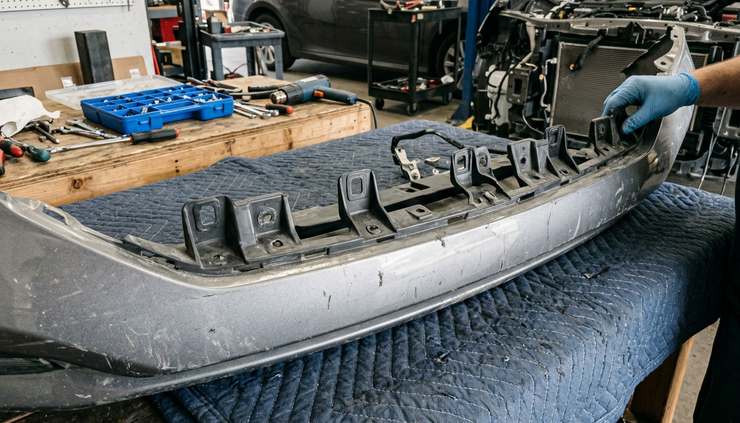
A junk yard bumper cover might be cheap, but if the mounting tabs are cracked, the shop may spend time repairing or reinforcing it. If the paint is faded or scratched, it may need refinishing. If brackets are missing, you may need another trip to the parts counter.
A new aftermarket bumper cover may cost more at first, but it should arrive clean and ready for prep. It still needs paint, but the body shop may spend less time fixing damage before installation.
For doors, the cost can swing even more. A bare door shell is just the metal outer structure. A complete used door may include:
Window glass
Window regulator
Wiring harness
Door handle
Lock parts
Mirror
Interior trim panel
Weatherstripping
Speaker
A complete used door can be a bargain if those parts are included and working. It can also become a hassle if the donor vehicle has different wiring, trim, or options.
A simple cost comparison helps avoid surprises
The best way to compare junk yard parts with aftermarket parts is to build a full installed-price estimate.
Use this basic formula:
Part price + fees + shipping + paint + hardware + labor = real cost
Here is an example of how the numbers can change.
Example repair | Junk yard part path | Aftermarket part path |
Bumper cover price | Lower | Higher |
Paint needed | Maybe, if color does not match | Almost always |
Prep work | Could be low or high | Usually predictable |
Hardware | May need extra clips or brackets | May still need extra hardware |
Fitment | OEM used part often fits well | Quality varies by brand |
Total savings | Strong if color and condition are good | Better if used part needs too much repair |
A used bumper in the right color with only small scuffs may save a lot. A used bumper with cracks, missing tabs, and bad paint may cost almost as much as a new aftermarket cover by the time it is fixed.
The same applies to doors. A clean, rust-free used door in the same color can be one of the best deals in collision repair. A rusty door with hidden damage is not a deal.
The phrase How Much Cheaper Are Junk Yard Parts Than Aftermarket Bumper and Door Panels comes down to this: junk yard parts are usually cheaper upfront, but the final savings depend on how close the used part is to “ready to install.”
Bumpers can be cheap, but fit and paint matter
Bumper repairs are one of the most common reasons people compare used and aftermarket parts. A bumper cover is the painted plastic piece most people call the bumper. Behind it are brackets, absorbers, reinforcements, sensors, and other parts.
A junk yard bumper cover can be a great buy when:
The donor vehicle is the same year range and trim
The mounting tabs are intact
The color is close or exact
There are no deep gouges or cracks
Sensor holes match your vehicle
Fog light openings match your vehicle
The yard includes needed brackets or trim
Small differences can matter. A bumper from the same model may not fit if one vehicle has parking sensors and the other does not. Sport trims, off-road packages, hybrid versions, and facelift years can use different covers.
Aftermarket bumper covers vary in quality. Some fit nearly like factory parts. Others need trimming, heating, adjustment, or extra labor. The cheaper the part, the more carefully it should be checked.
For an older car with faded paint, a same-color used bumper may be the cheapest practical fix. For a newer car where appearance matters, a new aftermarket bumper with fresh paint may look better, even if it costs more.
Door panels and door shells need a closer look
The term “door panel” can mean two different things.
Some people mean the interior door panel, which is the trim piece inside the car. Others mean the outer door shell or complete door assembly. The savings are different for each.
Interior door panels are often excellent junk yard buys. They can be expensive new, and aftermarket replacements may not exist for many vehicles. If the used panel has the right color, switch openings, handle style, and speaker grille, it may install with little trouble.
Used interior door panels are worth checking for:
Cracked plastic
Broken clips
Torn vinyl, cloth, or leather
Loose armrests
Water damage
Missing trim pieces
Sun fading
Sticky switches or broken bezels
Exterior door shells need more caution. A door can look fine from a few feet away and still have problems. Rust may hide along the bottom seam. Hinges may be bent from a crash. The frame may have slight damage that makes gaps uneven.
A used complete door can save money because many parts come already attached. That can reduce transfer labor. It is especially helpful if your original door has damaged glass, wiring, regulator, handle, and trim.
A new aftermarket door shell may be cleaner, but it usually comes bare. That means the shop must transfer or replace hardware, glass, seals, wiring, and trim. It also needs paint. The shell may cost less than a complete used OEM door in some cases, but labor can narrow the gap.
Junk yard parts are best when the vehicle is older or the color matches
Junk yard parts make the most financial sense when appearance standards are practical and the vehicle is not brand new. If the car is older, the goal may be to make it safe, usable, and decent looking without spending more than the car is worth.
They are especially smart for:
Daily drivers with cosmetic damage
Older cars where new OEM parts cost too much
Common models with lots of salvage yard inventory
Interior panels and trim pieces
Same-color bumpers and doors
Repairs paid out of pocket
Vehicles where perfect paint match is not required
A same-color used door or bumper can be the best-case scenario. Even then, paint may not match perfectly. Factory paint fades over time, and the donor vehicle may have lived in different weather. A white bumper from the same paint code can still look slightly different after years in the sun.
For many drivers, that small mismatch is acceptable. For a late-model vehicle or a high-value car, it may not be.
Junk yard parts are also a good choice when aftermarket options are poor. Some aftermarket panels are thin, do not line up well, or lack the right holes and brackets. A used OEM part from the same vehicle generation may fit better.
Aftermarket parts are best when condition and predictability matter
Aftermarket parts make sense when you want a clean, unused piece and do not want to gamble on salvage condition. They are also easier to order by part number, which helps when local junk yards do not have the right vehicle.
A new aftermarket bumper or door shell may be the better choice when:
The used options are scratched, cracked, or rusty
No same-color part is available
Shipping a used part costs too much
The body shop prefers new panels
The vehicle is newer and needs a cleaner finish
Insurance or repair documentation requires a certain part type
Sensors, trim, and options make used matching difficult
Aftermarket parts can still have fit issues. That is why body shops often prefer certain suppliers and avoid others. A cheap panel that needs extra labor is not always cheaper in the end.
For bumper covers, aftermarket is common and often reasonable. For door shells, the decision is more case-specific. A used OEM door may fit better, while a new aftermarket door may need more adjustment. The best choice depends on what is available and how much labor your shop expects.
How to inspect junk yard bumpers and door panels before buying
A careful inspection can protect most of the savings. If possible, see the part in person before paying. Photos help, but they do not always show broken tabs, small cracks, rust seams, or warped plastic.
For a bumper cover, check:
All mounting tabs and clip slots
Corners near the wheel wells
Lower edges that may be scraped
Cracks near grille openings
Sensor holes and washer nozzle openings
Fog light openings
Paint condition
Warping from heat or impact
For a door or door shell, check:
Bottom edge for rust
Hinge area for bends or cracks
Door skin for waves or dents
Window frame for twisting
Weatherstripping condition
Wiring plug compatibility
Lock and handle location
Interior trim color and style
Bring your VIN, paint code, trim level, and photos of your damaged part. Compare mounting points before leaving the yard if you can. If the yard has a return policy, read it before buying. Many salvage parts are sold as-is or have short exchange windows.
Also ask whether the yard removes the part or you pull it yourself. A self-service yard can be cheaper, but removing a door or bumper takes tools, time, and patience. A full-service yard costs more, but the part may be removed cleanly and ready for pickup.
The cheapest choice is not always the lowest price
A $120 used bumper can be a great deal. It can also become a $500 problem if it needs repair, paint, brackets, and extra labor. A $250 aftermarket bumper may look more expensive, but it can be the better buy if it arrives straight, clean, and easy to prep.
The same is true with doors. A cheap used door with rust is not cheap. A complete used OEM door in the right color, with good hinges and matching wiring, can beat a bare aftermarket shell by a wide margin.
Use this quick rule:
Buy used when the part is clean, complete, same-color, and easy to verify. Buy aftermarket when used parts are damaged, mismatched, rusty, or too hard to source.
For the best deal, get two prices before you decide. Ask for the junk yard part cost with all fees, then ask a body shop what it will cost to install and paint it. Compare that with a new aftermarket part installed and painted.
If the junk yard option still saves at least a few hundred dollars and the part is in good shape, it is probably worth it. If the savings are small, the cleaner aftermarket route may be the smarter repair.
The bottom line is simple: junk yard bumpers and door panels are often much cheaper upfront, and they can save serious money when the match is right. The winning choice is the one that costs less after paint, parts, and labor, not just the one with the lowest number written on the tag.


Comments